From Faded Lines to Specialized Pavement Marking Services
Parking lot maintenance used to be an afterthought for most Utah property owners, something handled once every few years by whoever had a sprayer and leftover paint. Lots sat with faded lines through entire winters, and drivers simply learned to navigate around the confusion. That approach has shifted as commercial property managers have come to understand how striping affects safety, liability, and how customers perceive a business.
Today there are several distinct paths available for getting a lot striped, and the differences between them matter more than they once did. Some property owners rely on handyman or landscaping crews who offer striping as an add-on. Others turn to paving companies that include striping as part of a broader resurfacing job. A smaller but growing group hires dedicated pavement marking contractors who focus almost entirely on striping, stenciling, and traffic flow design. Each option produces a different result, and the gap in quality tends to show up within the first harsh Utah winter.
Weighing Durability, Compliance, and Local Climate Factors
Evaluating these options starts with asking how well each contractor understands Utah’s climate demands. Freeze-thaw cycles, road salt, and intense summer UV exposure degrade paint at different rates, and a crew unfamiliar with these conditions may use materials suited to milder regions. Durable striping depends heavily on paint formulation, surface preparation, and application timing, none of which a generalist contractor necessarily prioritizes. A dedicated striping company tends to test pavement temperature and moisture before starting work, which sounds minor until you see how quickly poorly timed paint peels.
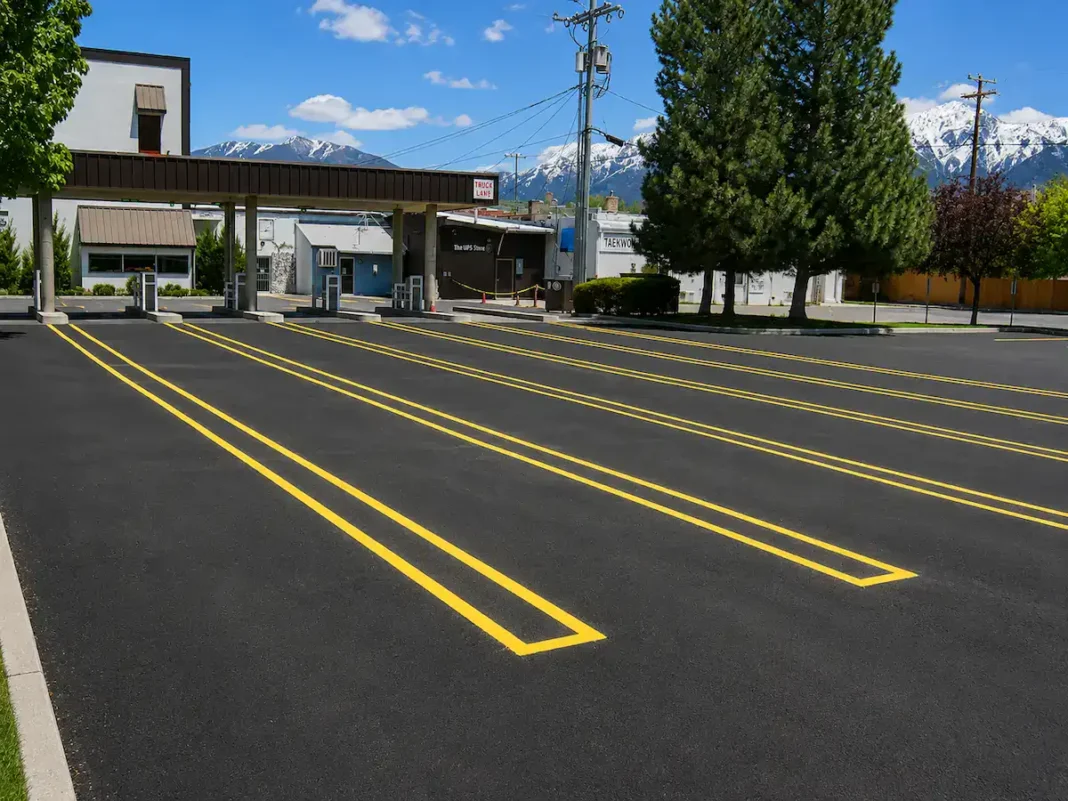
Compliance is the second factor worth examining, especially for lots with ADA-required accessible spaces, fire lanes, or directional arrows tied to local code. Getting these details wrong can expose a property owner to liability or failed inspections, so it helps to work with a company that treats layout accuracy as a core service rather than a courtesy. This is where firms offering dedicated parking lot striping in Utah have an advantage, since their crews work within state-specific guidelines daily rather than occasionally. Price matters too, but the cheapest bid often reflects thinner paint, fewer coats, or a rushed layout that needs redoing within a year.
Equipment quality also separates serious striping contractors from occasional providers. Truck-mounted striping machines produce straighter lines and more consistent paint thickness than handheld sprayers, and that consistency affects both appearance and longevity. Reflective glass beads, when properly embedded, extend nighttime visibility, which matters in poorly lit lots during Utah’s shorter winter days. Contractors who invest in this equipment usually show a broader commitment to doing the work correctly rather than quickly.
Matching the Right Contractor to Your Property’s Traffic Patterns
Deciding among these options becomes easier once a property owner considers the traffic patterns and layout complexity of their lot. A small retail lot with straightforward parking rows has different needs than a hospital complex with ambulance routes, loading zones, and multiple accessible entrances. Simpler lots might tolerate a less specialized contractor, while complex layouts benefit from a company experienced in traffic flow planning and signage placement. Reviewing a contractor’s past project photos, particularly on properties similar in size and function, tends to reveal more than a sales pitch ever will.
It also helps to ask how a contractor approaches long-term maintenance planning rather than treating striping as a one-time transaction. Lots restriped on a predictable schedule generally hold their visibility and compliance longer than those addressed reactively after complaints arise. Contractors who reference established guidelines, including the kind of ATSSA traffic safety resources, tend to bring a more structured approach to layout spacing, line width, and signage standards.
The right choice depends on balancing upfront cost against how long the results are expected to last and how much liability exposure the property carries. Property managers juggling multiple sites often find it worthwhile to standardize on one striping partner across locations, simplifying scheduling and ensuring consistent quality. Smaller single-site owners may prioritize responsiveness and local familiarity instead. Treating striping as a specialized trade rather than a minor maintenance task tends to produce better outcomes, both in appearance and in reduced liability risk.