Ever had one of those makeup days when the foundation is technically blended, the skincare was done properly, the primer behaved, and yet something still looks… off?
The base seems slightly fuzzy around the cheeks. Concealer collects strangely near the brows. The highlighter catches every tiny hair under sunlight. Your makeup looked flawless in the bathroom mirror, then your phone camera switched to HD and chose violence.
Sometimes the issue is not the makeup at all. It is simply the way tiny facial hairs interact with products, light and texture.
That does not mean everybody needs to remove facial hair. Peach fuzz, brow hair and baby hair are completely normal. But if you prefer grooming them, knowing where hair actually affects your finished look can save you from unnecessarily shaving half your face.
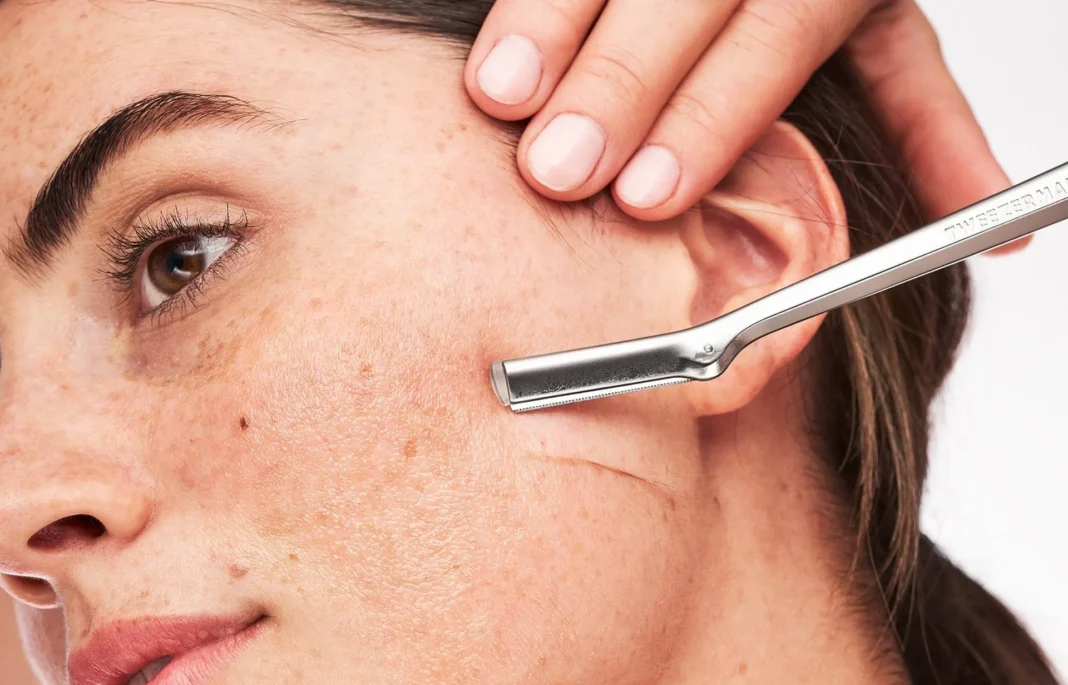
A facial razor and a female eyebrow trimmer do very different jobs, and understanding those differences is where smarter grooming begins.
Your Makeup Does Not Sit on Skin Alone
We usually think of foundation as sitting directly on our skin. In reality, it can also coat fine facial hair.
That is why makeup may sometimes look slightly more visible around areas with noticeable peach fuzz, especially when you apply heavier foundation or powder. Fine hairs can catch pigment and change how light reflects from the face.
The important part is that hair direction matters almost as much as hair amount.
For example, if you brush foundation upwards against the direction of peach fuzz, those tiny hairs can become more noticeable. Before immediately reaching for a Facial Razor, try changing your application technique.
Apply your base in thin layers and blend in the direction the facial hair naturally lies. Sometimes that alone makes enough of a difference.
A new grooming tool should not automatically be your first solution to a makeup problem.
Brows: Where One Tiny Hair Can Weirdly Change Everything
Brows are different because we are not trying to create a completely hair-free surface. We are trying to create a deliberate shape.
And this is exactly where over-grooming gets dangerous.
You notice one stray underneath the arch. Fine. Then there is another beside it. Then the tail suddenly looks uneven, so you “fix” that too. Ten minutes later, your brows have entered a rebranding exercise nobody approved.
A female eyebrow trimmer can be useful for dealing with obvious strays or managing longer brow hairs, but start by brushing the brows into their natural position.
Then step back.
Brows look very different when viewed from twenty centimetres away versus normal human-interaction distance.
Try the Three-Hair Rule
Before trimming, identify only the most obvious outliers first. Remove or shorten those, brush the brows again and reassess. You may discover that your eyebrow never needed a full redesign. It needed three hairs to calm down.
When using a female eyebrow trimmer, small corrections are considerably safer than attempting to create perfect symmetry in one sitting.
Remember: eyebrows are sisters, not identical twins, and one of them will always be slightly more chaotic before an important event.
Peach Fuzz: The Foundation Question
If you regularly wear foundation, skin tint or concealer, you may notice fine hair most around the cheeks, jaw and sideburn area.
Using a facial razor can create a temporarily smoother-feeling surface for people who prefer removing this fuzz. But there is an important distinction between removing hair because you like the result and removing hair because social media convinced you that normal facial texture is unacceptable.
Your face is allowed to have texture.
Pores are allowed.
Fine hair is allowed.
And if your foundation looks good from a normal distance, you do not need to zoom into your cheek until you manufacture a problem.
If you do choose facial shaving, avoid repeatedly going over the same tiny area simply because a few microscopic hairs remain. Makeup does not need laboratory-grade surface preparation.
Baby Hair Around the Hairline: Please Approach With Restraint
The tiny hairs around the forehead and temples can become more noticeable when applying foundation, bronzer or contour close to the hairline.
The instinct might be to remove them. Not so fast.
Baby hairs often blend into your natural hairline, and taking away too much can create a sharper, less natural boundary between your forehead and scalp.
A facial razor may give precise control, but precision does not mean you need to use it everywhere.
Instead, first adjust your makeup.
Use less foundation near the hairline and blend carefully rather than coating every tiny strand. A damp sponge or light brush can help prevent product from collecting noticeably in the hair.
Sometimes the best grooming technique is leaving the hair alone and using less makeup around it.
Wild concept, we know.
Why Concealer Can Suddenly Make Brow Hair Look Messier
Here is a sneaky makeup issue that rarely gets blamed correctly.
When you carve out brows using concealer, product can settle onto tiny stray hairs surrounding the brow. Those hairs then become lighter or more visible, making the eyebrow suddenly look less clean.
The immediate reaction is often: I need to trim more.
Instead, remove excess product first.
Brush through the area and check again before reaching for your Female Eyebrow Trimmer. You may discover that your brows were fine; your concealer simply highlighted hairs you had never noticed before.
This is a good example of why grooming after applying heavy makeup can lead to over-correction.
Inspect clean brows first. Makeup lies sometimes.
The Side-Lighting Test Is Better Than the Magnifying Mirror
Bathroom lighting tends to shine directly at the face, which can hide some facial hair while dramatically exaggerating other areas.
If peach fuzz is something you care about, check your face near a window before using a facial razor. Natural side lighting shows how hair actually catches light much more realistically.
Similarly, look at your brows from multiple angles before using a female eyebrow trimmer.
Why?
Because grooming decisions made under one brutally bright overhead bulb can look completely unnecessary ten minutes later outside.
The goal should be how you feel in real life, not how your skin performs under forensic lighting.
Your Pre-Makeup Grooming Checklist
Before removing anything, ask yourself:
- Is it actually hair affecting my makeup, or is my base too heavy?
- Can changing application direction solve the problem?
- Am I looking at normal texture through an unrealistic magnifying mirror?
- Do my brows need trimming, or simply brushing into place?
- Am I grooming because I prefer the look, or because one close-up selfie ruined my mood?
If you decide to use a facial razor, work gently and avoid trying a completely new routine ten minutes before an event. If your brows need tidying, a female eyebrow trimmer is better treated as a precision tool than a licence to keep removing hair until both brows look mathematically identical.
Better Makeup Does Not Always Require More Hair Removal
Facial grooming can absolutely change the way makeup appears, particularly around peach fuzz, brows and the hairline.
But the smartest beauty routine knows when grooming helps and when better application is enough.
Sometimes a facial razor can give you the smoother canvas you prefer. Sometimes your brow routine benefits from the precision of a female eyebrow trimmer. And sometimes the real fix is simply using less foundation, brushing hair in the right direction or stepping away from the 10x mirror.
Because the objective is not to make your face completely hairless.
It is to make your beauty routine work for your face, tiny hairs included.