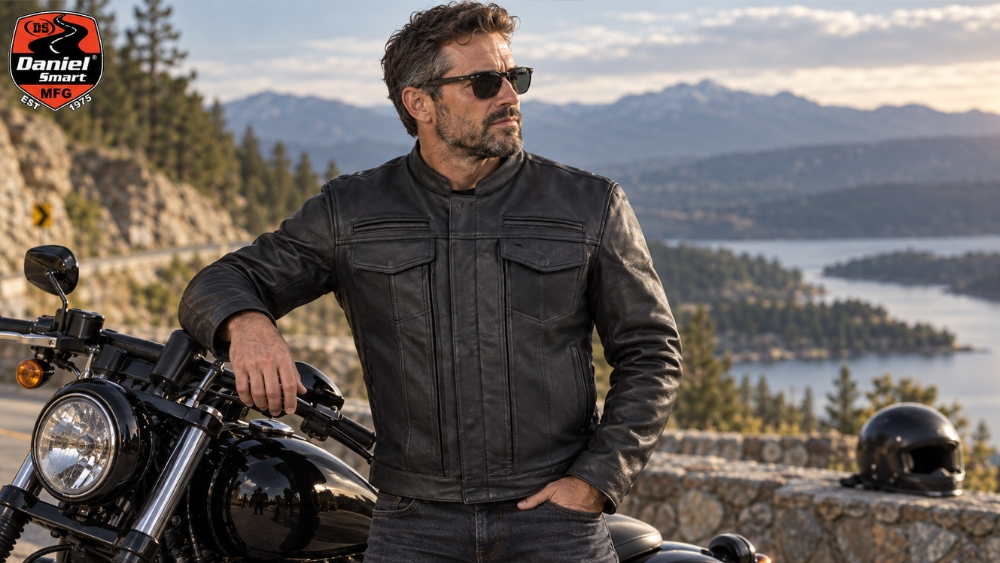
Weather changes how a motorcycle leather jacket feels, performs, and protects the rider from wind and temperature. Heat can increase internal warmth, cold can make leather feel stiffer, rain can saturate untreated leather, and strong wind can increase heat loss if cuffs, collars, and waist closures are not secure.
Leather remains one of the most popular materials in motorcycle apparel because it combines durability, abrasion resistance, wind protection, and traditional riding style. However, no leather jacket performs exactly the same in every weather condition.
Riders comparing men’s leather motorcycle jackets should therefore consider not only fit and appearance but also how the jacket will handle the temperatures, wind, humidity, and rain they encounter most often.
Understanding these weather effects helps riders choose the right ventilation, liner, closures, and layering system for their typical riding environment.
How Does Hot Weather Affect a Motorcycle Leather Jacket?
Hot weather increases the risk of heat buildup inside a leather jacket.
Leather naturally blocks more airflow than many lightweight fabrics. If the jacket has limited ventilation, body heat and moisture can become trapped.
This can lead to:
- Excessive sweating
- Damp clothing
- Heat discomfort
- Sticky interior liners
- Rider fatigue
Warm-weather performance depends heavily on how the jacket manages airflow.
Useful features may include:
- Perforated leather
- Chest vents
- Sleeve vents
- Underarm ventilation
- Rear exhaust vents
- Breathable mesh lining
A jacket designed for summer riding should allow fresh air to enter while also giving warm air a way to escape.
Why Does Riding Speed Matter in Hot Weather?
Ventilation becomes more effective as airflow increases.
At highway speeds, air can move through perforations and open vents much more efficiently.
At lower speeds, especially in stop-and-go traffic, that airflow drops.
This means a leather jacket may feel comfortable on an open highway but much warmer in city congestion.
Riders who spend significant time in traffic should consider this when choosing warm-weather gear.
A heavily ventilated jacket may perform better in slow summer riding than one that relies on only a few small vents.
How Does Humidity Affect Leather Jacket Comfort?
Humidity reduces how efficiently sweat evaporates from the body.
Even if the jacket has airflow, high humidity can make the rider feel warmer and more uncomfortable.
This is because moisture remains on the skin longer.
A breathable interior liner can help reduce direct contact between damp clothing and the leather shell.
Lightweight base layers can also improve comfort by helping manage moisture.
Humidity does not necessarily damage the leather immediately, but repeated exposure to sweat and moisture can affect the jacket if it is not cleaned and maintained properly.
How Does Cold Weather Affect Motorcycle Leather?
Cold temperatures can make leather feel firmer and less flexible, especially if the jacket has not been conditioned properly.
The bigger issue for riders, however, is heat loss from wind exposure.
At motorcycle speeds, cool air can feel significantly colder.
Leather helps block direct wind, making it useful for cooler-weather riding.
However, cold air can still enter through:
- Loose cuffs
- Open collars
- Waist gaps
- Vent openings
- Front zipper areas
A properly fitted jacket with secure closures performs better in cold conditions than a loose jacket.
Why Is Wind Protection Important in Cold Weather?
Wind increases heat loss.
Even when the outside temperature does not seem extremely low, continuous wind pressure can make the rider feel much colder.
Leather performs well as a wind-resistant outer layer because its surface blocks much of the direct airflow.
The effectiveness of the jacket still depends on fit.
A loose jacket may allow air to enter through openings and circulate inside.
Important cold-weather features include:
- Secure front zipper
- Adjustable cuffs
- Close-fitting collar
- Waist adjustment
- Removable thermal liner
These elements work together to reduce unwanted airflow.
Can a Thermal Liner Improve Cold-Weather Performance?
Yes.
A thermal liner adds insulation between the rider and the leather outer shell.
This helps retain body heat.
A removable thermal liner is especially useful because it allows the same jacket to adapt to changing conditions.
Riders can install the liner during:
- Cool mornings
- Fall rides
- Winter riding
- Evening trips
- Higher-elevation routes
When temperatures rise, the liner can be removed.
The jacket should still fit correctly in both configurations.
How Does Rain Affect a Motorcycle Leather Jacket?
Rain can affect leather significantly if the material becomes saturated.
Light exposure may not cause major problems, especially if the leather has been properly treated.
Long periods in heavy rain can make leather absorb moisture.
Wet leather may become:
- Heavier
- Softer
- Less comfortable
- More difficult to dry
If leather dries incorrectly, it may become stiff or lose some of its natural oils.
Riders who frequently encounter rain should not assume that a standard leather jacket is fully waterproof.
Is Leather Waterproof?
Generally, leather is not completely waterproof unless it has been specifically treated or constructed with additional waterproof features.
It may resist light moisture for a limited period, but prolonged rain can eventually penetrate.
Water resistance depends on:
- Leather treatment
- Surface finish
- Seam construction
- Jacket design
- Condition of the leather
For occasional light rain, a maintained leather jacket may provide limited resistance.
For frequent or heavy rain, riders may prefer a dedicated rain layer or gear specifically designed for wet-weather riding.
What Should You Do If a Leather Motorcycle Jacket Gets Wet?
Allow the jacket to dry naturally.
Avoid using strong direct heat such as:
- Hair dryers
- Radiators
- Heaters
- Open flames
Excessive heat can dry out the leather and damage its natural oils.
Instead:
- Remove excess surface moisture
- Hang the jacket in a ventilated area
- Allow it to dry gradually
- Follow the manufacturer’s leather-care instructions afterward
Once dry, appropriate conditioning may help maintain flexibility.
Always use products suitable for the specific type of leather.
How Does Strong Wind Affect a Leather Jacket?
Strong wind creates continuous pressure against the rider.
A properly fitted leather jacket usually handles wind well because of its structured material and wind-resistant surface.
However, loose sections may flap repeatedly.
This can create:
- Noise
- Distraction
- Fatigue
- Additional drag
Adjustable waist and cuff features can help keep the jacket stable.
Correct sizing is especially important for riders who spend significant time on highways.
Does Wind Enter Through Jacket Vents?
Yes, especially if vents remain open.
In warm weather, this is useful.
In cold or windy conditions, the same airflow can become uncomfortable.
Closable vents give riders more control.
A jacket with zippered ventilation can be adjusted as conditions change.
This makes it more versatile than a fully perforated jacket in climates with large temperature swings.
How Does Direct Sunlight Affect Leather?
Long-term exposure to strong sunlight can dry or fade leather over time.
UV exposure may gradually affect the color and surface condition.
Motorcycle jackets are naturally exposed to sunlight during riding, but proper maintenance can help preserve the material.
Riders should:
- Keep leather clean
- Use suitable conditioner when recommended
- Store the jacket away from prolonged direct sunlight
- Avoid leaving it on the motorcycle unnecessarily for long periods
Dark leather can also absorb heat quickly when exposed to direct sun.
This can make the jacket feel hot before the ride even begins.
How Does Spring Weather Affect Jacket Choice?
Spring can be unpredictable.
A ride may begin cool, become warm in the afternoon, and end with lower temperatures.
This makes adaptability important.
A useful spring setup may include:
- Removable thermal liner
- Adjustable vents
- Secure cuffs
- Moderate layering room
The ability to change insulation and airflow makes the jacket more practical throughout the day.
A fixed heavy liner may become too warm once temperatures rise.
How Does Summer Weather Affect Jacket Choice?
Summer emphasizes ventilation.
Riders should look for features such as:
- Perforated leather
- Large intake vents
- Rear exhaust vents
- Breathable lining
- Removable insulation
A jacket that performs well in summer should allow enough airflow to reduce trapped heat.
The motorcycle itself also matters.
Large windshields can redirect air away from the rider and reduce ventilation.
How Does Fall Weather Affect Jacket Performance?
Fall often brings cooler mornings, stronger wind, and temperature changes throughout the day.
Leather performs well in these conditions because of its wind resistance.
A removable thermal liner can add warmth when needed.
Adjustable cuffs and collars become increasingly important because small gaps can allow cool air to enter.
Fall is often one of the most comfortable seasons for leather motorcycle jackets.
How Does Winter Weather Affect Leather Riding Gear?
Winter riding places much greater demands on insulation and wind control.
Leather can serve as a strong outer wind barrier, but additional layers are usually required.
Useful winter features include:
- Thermal liner
- Secure collar
- Tight cuffs
- Waist adjustment
- Enough room for base layers
Extremely cold conditions may require specialized winter motorcycle gear beyond a standard leather jacket.
Riders should avoid relying on leather alone for severe cold.
How Do Temperature Changes Affect Touring Riders?
Touring riders may experience several weather conditions in one day.
A route can include:
- Cool morning air
- Hot afternoon temperatures
- Higher-elevation cold
- Wind
- Light rain
- Evening temperature drops
This is why touring jackets benefit from adaptable features.
A removable liner, adjustable ventilation, and flexible layering system can help riders respond to changing weather without carrying several jackets.
Does Weather Change How Armor Feels?
Yes.
Armor adds material inside the jacket and can affect temperature comfort.
In hot weather, protective inserts may reduce airflow around the shoulders, elbows, and back.
In cold weather, they may create extra internal structure but should not be relied on for insulation.
Riders should test the jacket with armor installed because it changes:
- Fit
- Airflow
- Layering space
- Movement
A jacket that feels comfortable without armor may become noticeably warmer or tighter once inserts are added.
Leather vs Textile Jackets in Changing Weather
Leather and textile motorcycle jackets handle weather differently.
Leather usually offers strong wind resistance, durability, and a structured fit.
Men’s textile motorcycle jackets may provide different combinations of ventilation, waterproof membranes, lightweight construction, and removable layers depending on the design.
This can make textile jackets attractive for riders who frequently encounter:
- Heavy rain
- Large temperature changes
- Very hot conditions
- Multi-season touring
Leather may appeal more to riders who prioritize wind resistance, abrasion-resistant characteristics, and traditional motorcycle styling.
The best material depends on climate and riding purpose.
Can One Leather Jacket Work in Multiple Seasons?
Yes, if the jacket is designed for adaptability.
A multi-season leather jacket may include:
- Removable thermal liner
- Adjustable ventilation
- Secure wind-resistant closures
- Layering room
- Breathable interior lining
This allows riders to change the jacket setup as weather changes.
However, extreme heat or extreme cold may still require specialized gear.
No single jacket performs perfectly in every condition.
How Should Riders Store Leather Between Seasons?
Proper storage helps preserve leather quality.
Store the jacket:
- In a cool, dry area
- Away from direct sunlight
- On a supportive hanger
- With enough space to maintain its shape
Avoid storing leather while damp.
The jacket should be fully dry before being placed away for extended periods.
Periodic inspection helps identify dryness, cracking, or hardware issues before the next riding season.
What Weather Features Should Riders Look for Before Buying?
Before buying a leather motorcycle jacket, consider the climate where you ride most.
Look for:
- Perforation for warm climates
- Closable vents for variable weather
- Rear exhaust vents
- Removable thermal liner
- Adjustable cuffs
- Secure collar
- Waist adjustment
- Breathable lining
Riders who regularly encounter rain should also think about how they will manage wet-weather protection.
The best jacket is built around the weather you actually experience.
Final Thoughts
Weather has a major effect on how a motorcycle leather jacket performs.
Hot conditions increase the need for ventilation and breathable lining. Cold weather makes wind management and insulation more important. Rain can saturate untreated leather, while strong wind highlights the importance of proper fit and secure closures.
Leather performs especially well as a durable, wind-resistant outer layer, but its comfort depends on how the jacket is designed.
Perforation, adjustable vents, removable liners, secure cuffs, collar design, and proper maintenance all help extend the conditions in which a leather motorcycle jacket remains practical.
The most versatile jacket is not the one designed for a single perfect day. It is the one that gives the rider enough control to adapt as temperature, wind, and weather change throughout the ride.