


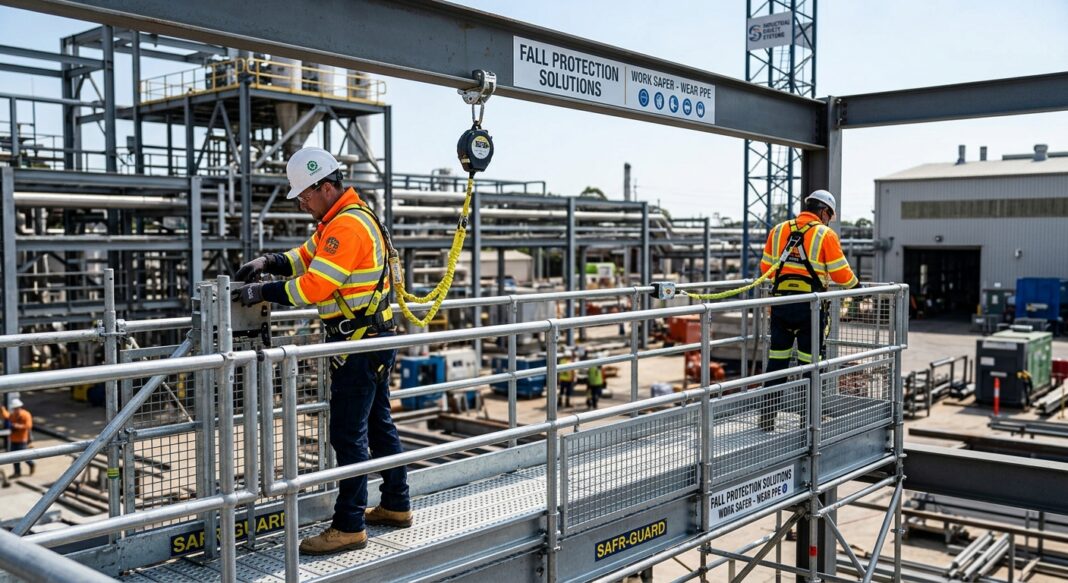
Industrial workplaces often involve elevated platforms, loading areas, walkways, ladders, machinery, and other environments where slips and falls can result in serious injuries. Companies such as Intrepid Industries help facilities address these hazards by manufacturing OSHA-compliant safety products, including self-closing safety gates, toeboards, safety hooks, and custom molded polyurethane components. Their durable protection solutions are designed to help refineries, warehouses, construction sites, and other industrial facilities reduce fall risks, improve workplace safety, and maintain compliance with applicable safety requirements.
Why Fall Protection Matters in Industrial Facilities
Falls remain one of the most significant workplace hazards, particularly in industries where employees regularly work near elevated surfaces or open edges. A fall protection strategy should therefore go beyond providing personal protective equipment. It should also include engineered safety measures that prevent workers from reaching dangerous areas or accidentally falling from elevated platforms.
Guardrails, safety gates, toeboards, and properly designed access systems can create important layers of protection. When these products are manufactured from durable materials and installed correctly, they can withstand demanding industrial environments while providing reliable protection over time.
The Role of Toeboards in Fall Prevention
Toeboards are an important component of many industrial guardrail and platform systems. They are installed along the lower edge of elevated platforms to help prevent tools, equipment, materials, and other objects from falling to lower levels. They can also provide an additional barrier that reduces the likelihood of a worker’s foot slipping over an exposed edge.
A common question when planning a compliant system is: how tall should a toeboard be? OSHA requirements can vary according to the specific application and workplace configuration, so facilities should always verify the applicable standard before installation. In many general industrial applications, OSHA’s guardrail requirements call for a toeboard to have a minimum vertical height of 3.5 inches above the walking-working surface, subject to applicable exceptions and additional requirements.
Another frequently searched question is, toeboards are usually installed along exposed platform edges where falling objects could create a hazard for workers below. Their exact design, height, strength, and installation should be selected according to the relevant OSHA requirements and the conditions of the facility.
Self-Closing Safety Gates for Controlled Access
Openings in guardrails can create serious hazards when employees are moving between stairs, platforms, ladders, and elevated work areas. A self-closing safety gate can provide an additional protective barrier by automatically returning to a closed position after a worker passes through.
These gates are particularly useful around industrial access points where employees need frequent entry and exit but where an unprotected opening could expose them to a fall. Using engineered safety gates helps facilities create more consistent protection without relying entirely on workers to remember to close a gate manually.
Safety Hooks and Industrial Protection Equipment
Safety hooks can provide another useful layer of protection in industrial environments. Depending on their application, they may help secure equipment, control access, or support safer work practices around elevated areas and industrial structures.
The right safety product should be selected according to its intended application, load requirements, environmental conditions, and applicable safety standards. High-quality components are especially important in demanding environments such as refineries and construction sites, where equipment may be exposed to weather, chemicals, heavy use, or abrasive conditions.
Custom Components for Demanding Environments
Not every facility has identical safety requirements. Custom molded polyurethane components can help manufacturers and facility operators address specialized applications where standard products may not provide the necessary fit or performance.
Polyurethane is valued in many industrial applications because of its durability, resistance to wear, and versatility. Custom components can be designed around particular equipment or facility requirements, helping businesses develop safety solutions that integrate effectively into existing operations.
Improving Safety in Refineries, Warehouses, and Construction Sites
Different industrial environments present different hazards.
Refineries may require robust protection around elevated walkways, process equipment, ladders, and maintenance areas. Products designed for demanding industrial conditions can help protect workers while supporting operational requirements.
Warehouses commonly have elevated storage areas, mezzanines, loading platforms, and material-handling zones. Proper guardrails, gates, and toeboards can help reduce fall and falling-object hazards in these areas.
Construction sites are constantly changing, making adaptable fall protection especially important. Temporary and permanent safety systems can help protect workers around elevated surfaces, openings, stairs, and access points.
Building a Stronger Workplace Safety Strategy
Effective fall protection should be considered part of a broader workplace safety program. Employers should identify hazards, evaluate the risks associated with each work area, select suitable engineering controls, and ensure that safety equipment is properly installed and maintained.
Regular inspections are also essential. Damaged gates, loose components, corroded hardware, missing toeboards, or improperly secured barriers can compromise an otherwise effective safety system. Employees should receive appropriate training and understand how safety equipment is intended to be used.
Choosing Durable Fall Protection Solutions
Industrial safety products must perform reliably under demanding conditions. When choosing components, businesses should consider material quality, design, durability, compatibility, installation requirements, and applicable OSHA standards.
Working with an experienced manufacturer can make it easier to identify solutions suited to a facility’s specific hazards. Intrepid Industries demonstrates how specialized manufacturing can support industrial safety through products such as self-closing safety gates, toeboards, safety hooks, and custom molded polyurethane components.
Conclusion
Fall protection is an essential part of creating safer industrial workplaces. From toeboards and self-closing safety gates to specialized hooks and custom molded components, properly selected safety products can help prevent accidents and protect workers around elevated areas and hazardous access points.
For refineries, warehouses, construction sites, and other industrial facilities, investing in durable, high-quality protection solutions can support both employee safety and regulatory compliance. By combining engineered safety equipment with regular inspections, employee training, and effective hazard assessment, organizations can create workplaces where fall risks are controlled before they become serious incidents.