



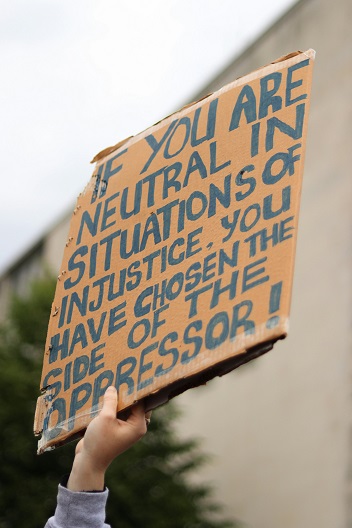
Political neutrality is a concept that refers to the impartial stance taken by individuals, organizations, or institutions in relation to political ideologies, parties, or movements. This position seeks to cultivate an environment of fairness and equity, allowing for reasoned discourse and collaborative decision-making among diverse groups. In democratic societies, where political pluralism is celebrated, the notion of neutrality gains significance, as it enables constructive dialogue and mitigates polarizing influences that can disrupt social cohesion. The pursuit of political neutrality is often a response to the increasingly charged political climate we observe today. In a landscape where voices clash and opinions polarize, striving for a neutral ground seeks to foster understanding and reconciliation rather than division. Additionally, neutrality can serve as a guiding principle for public institutions, encouraging policies and practices that are inclusive and representative of various perspectives, thereby enhancing democratic participation.
Moreover, the potential benefits of political neutrality are multifaceted. By prioritizing impartiality, individuals and institutions can help create spaces where conflicting ideas can be discussed openly and respectfully, leading to more informed decision-making. Neutral platforms can promote collaboration and innovation, as participants are encouraged to focus on common goals rather than entrenched partisan interests.
Despite its advantages, achieving true political neutrality remains challenging in today’s climate, fraught with deep-seated biases and strong ideological convictions. Understanding the essence of political neutrality and its value is crucial as we navigate complex discussions that shape the future of our democratic societies.
Historical Perspectives on Political Neutrality
The concept of political neutrality has undergone significant transformations throughout history, shaped by various social, cultural, and political influences. In ancient times, city-states operated with a degree of neutrality in their foreign relations, often seeking to avoid entanglements in external conflicts. Notable examples can be found in the strategies of ancient Greece, where states such as Athens and Sparta navigated complex alliances and rivalries without adopting overtly partisan stances. This early form of neutrality arguably laid the groundwork for future diplomatic doctrines.
During the Enlightenment, the idea of neutrality began to be more systematically articulated as thinkers like John Locke and Montesquieu examined the role of government and individual rights. Their emphasis on rational discourse over divisive politics contributed to the notion that political systems could exist without strong ideological biases. Moreover, the principles of neutrality were brought to the forefront by the Westphalian peace treaties in 1648, which established sovereign states with the commitment to respect each other’s political choices. This marked a pivotal moment where neutrality became not just a tactic, but a foundational norm for international relations.
The 20th century saw the emergence of political neutrality as a formal doctrine in the context of global conflicts, particularly during and after the World Wars. The establishment of organizations like the United Nations fostered discussions on political neutrality as a means of conflict resolution and peacekeeping. Countries such as Switzerland became emblematic of political neutrality, maintaining their independence while facilitating dialogue among warring parties.
However, the rise of polarized political landscapes in recent decades raises questions about the feasibility of remaining neutral. Political neutrality today must navigate a labyrinth of social media dynamics, partisan politics, and global crises, making its historical precursors both relevant and challenging. The evolving notion of neutrality continues to reflect the complexities of power, governance, and societal values in our modern context.
The Current Political Climate: A Brief Overview
The contemporary political landscape is increasingly characterized by polarization and partisanship, which raises significant questions regarding the possibility of neutrality. One of the primary factors contributing to this environment is the rise of social media, which plays a crucial role in shaping public opinion and facilitating the dissemination of information. Platforms like Twitter and Facebook often amplify extreme viewpoints, creating echo chambers where individuals are more likely to engage with others who share their beliefs, thus reinforcing existing biases.
Additionally, misinformation has become a pervasive issue, complicating the landscape of political discourse. The rapid spread of inaccurate or misleading information undermines informed decision-making and fosters distrust among citizens. As individuals are bombarded with conflicting narratives from various sources, the ability to achieve a neutral stance becomes increasingly challenging. This phenomenon is not merely a technological issue; it also reflects deeper societal divisions that manifest along cultural, economic, and ideological lines.
The broad cultural divides present in society further exacerbate tensions within the political sphere. Differences in values, beliefs, and experiences contribute to the growing chasm between political factions. As communities become more segmented, achieving a common understanding—let alone a neutral position—becomes a daunting task. The notion that individuals can maintain an impartial viewpoint amidst such circumstances is further complicated by the emotional investment many have in their political identities.
In summary, the convergence of social media influence, pervasive misinformation, and deep-rooted cultural divides creates a political environment that challenges the possibility of neutrality. As polarization accelerates, the effort to retain a balanced perspective becomes increasingly intricate, necessitating a nuanced understanding of the factors at play in today’s political climate.
Arguments For and Against Political Neutrality
The concept of political neutrality has stirred extensive debate among political theorists, activists, and everyday citizens. Proponents of political neutrality argue that maintaining a neutral stance can foster dialogue and understanding among opposing viewpoints. Supporters suggest that a neutral position allows individuals to engage in discussions without the baggage of bias, promoting constructive conversation rather than partisan conflict. By advocating for neutrality, it is posited that one can encourage empathy and cultivate an environment conducive to mutual respect. Advocates cite examples of countries where political neutrality has led to stability and a more harmonious civic life.
Moreover, neutrality can afford individuals the ability to objectively assess political narratives and scrutinize policies without emotional entanglement. This perspective not only demonstrates a commitment to informed decision-making but also encourages participation in the political process devoid of the influence of propaganda or partisanship. With an increasing polarization in political ideology, advocates believe that neutrality might serve as a vital counterbalance to extreme partisanship.
Conversely, critics claim that political neutrality is impractical, especially during tumultuous times marked by significant social injustices and ethical dilemmas. They contend that inactions stemming from neutrality can implicitly perpetuate systemic issues. If individuals remain neutral in the face of oppression, they risk alienating marginalized voices and contributing to the status quo. Activists stress the moral imperative to take a stance on pressing societal issues, arguing that neutrality can be interpreted as complicity. Furthermore, some theorists posit that it’s impossible to remain truly neutral, as personal beliefs and biases inevitably color perceptions and actions.
Ultimately, the implications of maintaining political neutrality in today’s climate raise important questions about civic responsibility and the role of individuals in shaping discourse. Such considerations prompt ongoing debates about the efficacy and ethics of adopting a neutral position in the face of politically charged issues.
Neutrality in Practice: Challenges and Realities
In the current political climate, the concept of neutrality has become increasingly complicated. Individuals and organizations alike face significant challenges in striving to maintain a neutral stance amid pervasive political polarization. The pressure to align with strong opinions can often overshadow the ability to stay impartial. This issue is particularly pronounced in contexts such as social media, where rapid information dissemination amplifies partisan viewpoints, making it difficult for neutral perspectives to gain traction.
Moreover, social dynamics compel many actors to present opinions that conform to dominant narratives. This phenomenon can manifest in workplace environments, where employees may feel obligated to echo the prevailing sentiments of their colleagues or industry leaders, undermining their own voice and potential neutrality. Similarly, organizations may adopt positions unintentionally to secure stakeholder approval or funding, thereby diluting their credibility as neutral entities.
Additionally, the global nature of information exchange means that conflicting messages can emerge from different regions, complicating efforts to maintain neutrality. Organizations aiming for neutrality must navigate these complexities by employing clear communication strategies while recognizing the pervasive influences of societal expectations.
Moreover, the media plays a crucial role in shaping public discourse and, as such, faces criticism for bias, whether perceived or actual. Media outlets striving for neutrality encounter pressure from audiences who demand content that aligns with their personal views. This creates a challenging environment for journalists and media professionals who must strive to report without bias while still resonating with their viewers. Ultimately, sustaining neutrality in today’s hyper-partisan environment is fraught with obstacles requiring thoughtful consideration and concerted effort from all involved parties.
The Role of Media and Journalism in Political Neutrality
The media and journalism play a crucial role in shaping public perception and understanding of political events and issues. In a landscape filled with polarized opinions and partisan narratives, the responsibility of journalists to maintain neutrality becomes increasingly significant. The portrayal of political parties, policies, and candidates can substantially influence the audience’s beliefs and attitudes, making ethical journalism a cornerstone of democratic societies.
Balanced coverage is essential for ensuring that citizens receive accurate and fair information about the political climate. Journalists are tasked with presenting multiple viewpoints, providing context to news stories, and facilitating informed discourse among the public. This can involve interviewing diverse sources, fact-checking, and presenting data objectively. However, achieving neutrality is often complicated by media bias, a phenomenon where news outlets may favor particular political perspectives, intentionally or unintentionally.
Such bias can arise from various sources, including the owners of media organizations, audience preferences, and the social environment in which news is consumed. When media outlets cater to specific demographics or political affiliations, they may inadvertently reinforce existing beliefs rather than challenge them. This echo chamber effect can lead to increased polarization, as audiences become less exposed to alternative viewpoints and critical debates.
Consequently, it is vital for journalists to practice integrity, adhering to established ethical standards while striving for neutrality. Organizations such as the Society of Professional Journalists provide guidelines that emphasize accuracy and fairness. Journalists must recognize their influential role in democratic dialogue and continually seek ways to present news that enriches understanding rather than deepens divisions.
Case Studies: Instances of Successful and Failed Neutrality
In the analysis of neutrality within contemporary political discourse, various individuals and organizations provide relevant case studies that illustrate both successful and failed attempts to maintain a neutral stance. These examples reveal the complexities and challenges inherent in striving for impartiality in a polarized environment.
One notable instance of successful neutrality is the Swiss political landscape, where the nation has maintained a long-standing tradition of neutrality in foreign conflicts. Switzerland’s policy is not merely reactive but rooted in historical precedent as well as an explicit constitutional mandate. The Swiss model presents a case of effective neutrality, balancing internal political divisions while fostering a diplomatic environment that enhances trade and international cooperation. As a result, Switzerland has positioned itself as a hub for international negotiation, significantly benefiting its economy and international relations.
Conversely, the example of media organizations attempting to remain neutral illustrates challenges inherent in political discourse. A significant instance is the case of a major American news network that pledged to uphold impartial reporting. However, in light of increasing public scrutiny and accusations of bias from both sides of the political spectrum, their efforts faced considerable backlash. The network struggled to find a balance between presenting factual reporting and catering to audience preferences. Eventually, the perception of bias led to diminished credibility among viewers, undermining the organization’s objective to maintain a neutral stance.
These cases highlight vital lessons about neutrality in political climates. Successful neutrality often requires a foundational cultural and institutional commitment, whereas perceived neutrality can quickly erode under external pressures and expectations. Analyzing these instances contributes to a broader understanding of the feasibility of remaining neutral in a deeply divided political landscape.
The Impact of Globalization on Political Neutrality
Globalization has significantly transformed the political landscape, introducing complexities that challenge traditional notions of neutrality within various political arenas. As nations become more interconnected through trade, cultural exchange, and technological advancements, local political issues often intertwine with global dynamics. This interdependence complicates the ability of states to maintain neutrality, necessitating a reevaluation of their political positions.
One prominent aspect of globalization is the emergence of transnational issues, such as climate change, terrorism, and human rights, which are inherently global in nature. Local political entities frequently find themselves advocating for policies that align with international norms and standards, which can conflict with their traditional stance on neutrality. For instance, a country may wish to remain neutral in international conflicts, yet face pressure from global coalitions or economic partnerships to take a definitive stance.
The role of international organizations also adds to this complexity. Institutions such as the United Nations and the World Trade Organization often impose regulations and expectations that national governments must navigate. This can limit the autonomy of states in favor of broader, cooperative agendas, which can further dilute the idea of neutrality in politics. Additionally, the rapid flow of information in a globalized world means that local political decisions are scrutinized by international audiences, compelling leaders to consider the global implications of their policies.
Another factor to consider is the rise of global civil society movements, which advocate for issues like social justice and environmental protection. These movements challenge governments to address local problems through a global lens, thus making it increasingly difficult to adhere to a neutral political stance. As a result, the concept of neutrality becomes particularly elusive in a world where local interests are consistently influenced by global events and the actions of international communities.
Conclusion: The Future of Political Neutrality
As we delve into the complexities of modern political landscapes, the quest for neutrality remains a contentious topic. Throughout this discussion, we have examined various dimensions of neutrality, including the challenges posed by polarizing ideologies, the influence of social media, and the tendency for individuals to gravitate toward like-minded groups. These factors contribute to the increasing difficulty of maintaining an unbiased stance in political discourse.
The future of political neutrality is uncertain and likely dependent on several factors. One potential pathway is the promotion of civil discourse and education, where individuals are encouraged to engage with diverse perspectives. By fostering a climate that values open dialogue, there may be opportunities for understanding and collaboration, which could facilitate a more neutral political environment.
However, as societal issues become more urgent and complex, the role of advocacy cannot be overlooked. Many argue that neutrality may no longer be a viable position when confronting critical issues such as climate change, social justice, or healthcare reform. The need for advocates who take a stand for specific causes often overshadows the ideal of neutrality in public spaces. This implies that, for many, the emphasis on advocacy might be seen as more crucial than remaining politically neutral.
Ultimately, the aspiration for true political neutrality may still hold relevance; however, it requires a careful balance. It calls for active engagement in discussions while being mindful of the diverse range of viewpoints. As we move forward, societies might strive to find common ground amidst differing opinions, fostering an environment where neutrality can coexist with the pressing need for advocacy, thus shaping a more inclusive political climate.