



Why Grade 5 Titanium Matters in Modern Engineering
Grade 5 titanium, commonly known as Ti-6Al-4V, is one of the most widely used titanium alloys because it combines high strength, relatively low weight, corrosion resistance and useful performance across demanding applications. For buyers comparing a grade 5 titanium supplier, the important question is not simply whether the alloy is available, but whether the required product form, condition, specification and documentation match the application. A global specialty metals distributor can also help manufacturers manage material requirements across different facilities, industries and supply programs.
What Is Grade 5 Titanium?
Grade 5 is an alpha-beta titanium alloy containing titanium with aluminum and vanadium as its principal alloying elements. The designation Ti-6Al-4V reflects its nominal composition of approximately 6% aluminum and 4% vanadium, with titanium making up the balance along with controlled residual elements.
The alloy is widely used because it offers a practical balance between mechanical strength, density, corrosion behavior and manufacturability. It is available in several mill product forms, including round bar, rectangular bar, plate, sheet, block and other forms depending on the applicable specification and supply program.
What Makes Ti-6Al-4V Different?
Commercially pure titanium grades such as Grades 1 through 4 are valued for corrosion resistance and formability, but their strength levels differ from those of alloyed titanium. Grade 5 gains significantly greater strength through the addition of aluminum and vanadium.
That difference makes Ti-6Al-4V suitable for parts that must carry meaningful mechanical loads while keeping component weight under control. It is one reason the alloy has become common in aerospace structures, fasteners, rotating or structural components, marine systems and other high-performance applications.
Key Properties of Grade 5 Titanium
The value of Grade 5 does not come from one isolated property. Engineers typically select it because several useful characteristics work together.
High Strength-to-Weight Ratio
Titanium is substantially less dense than many steels, yet Grade 5 can provide high tensile and yield strength depending on product form, condition, section size and governing specification. This combination is especially useful where reducing mass is important but the component must still support significant loads.
For aerospace and performance-oriented engineering, that balance can contribute to lighter structures without automatically requiring a lower-strength material.
Corrosion Resistance
Grade 5 titanium forms a stable oxide layer on its surface, which helps it resist corrosion in many service environments. This characteristic supports its use in marine, industrial and other applications where moisture, chemicals or corrosive exposure may be part of the operating environment.
Material selection should still be based on the exact chemical environment, temperature and design conditions. No alloy should be treated as universally corrosion-proof.
Useful Performance Across Demanding Environments
Ti-6Al-4V is used in applications that require a combination of strength, fatigue performance, corrosion resistance and dimensional reliability. Its performance can also be influenced by heat treatment, processing route, surface condition and final component geometry.
This is why engineers normally evaluate the material against the required specification rather than relying only on the general name “Grade 5 titanium.”
Grade 5 Compared With Other Common Titanium Grades
Understanding nearby grades helps explain why Grade 5 is selected so often.
Grade 5 vs Grade 2 Titanium
Grade 2 is a commercially pure titanium grade. It is widely used when corrosion resistance, ductility and formability are important, including many chemical-processing and industrial applications.
Grade 5, by contrast, is an alloyed titanium grade with substantially higher strength. Where a design needs higher mechanical performance, Ti-6Al-4V may be more appropriate. Where extreme formability or a commercially pure grade is preferred, Grade 2 may be the better match.
The final choice should come from engineering requirements, not from assuming that the higher-strength grade is automatically superior in every application.
Grade 5 vs Grade 23 Titanium
Grade 23 is commonly known as Ti-6Al-4V ELI, with ELI meaning extra-low interstitial. It is closely related to Grade 5 but is produced with tighter limits on certain interstitial elements.
Grade 23 is frequently associated with medical and other applications that have specific material-performance requirements. Grade 5 remains a widely used option for aerospace, industrial, marine, power-generation and precision-engineered parts.
Where Is Grade 5 Titanium Round Bar Used?
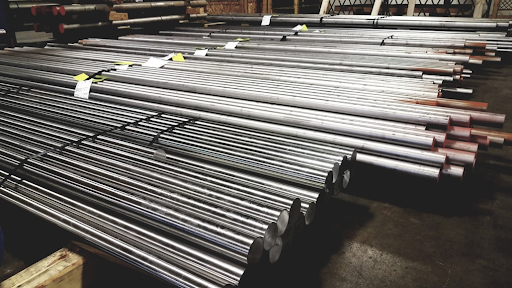
Round bar is a practical starting form for components that will later be machined, turned, forged or otherwise processed into finished parts. It allows manufacturers to produce shafts, fasteners, fittings, structural hardware and many other cylindrical or machined components.
Aerospace Structures and Components
Aerospace is one of the best-known application areas for Ti-6Al-4V. Grade 5 round bar can be used as feedstock for aircraft structural parts, fasteners, turbine-related components and other parts where high strength and weight reduction are valuable.
However, aerospace sourcing is specification-driven. Buyers must verify the applicable AMS, ASTM or other required standard, along with condition, inspection and traceability requirements.
Marine, Power and Industrial Components
Grade 5 titanium is also used in marine applications, power-generation equipment and industrial systems. Its combination of corrosion resistance and mechanical strength can make it suitable for parts exposed to demanding operating conditions.
The correct choice depends on the service environment, stress level, temperature, fabrication route and the standard referenced on the engineering drawing or purchase order.
High-Performance and Precision Parts
Ti-6Al-4V is used in high-performance automotive parts, bicycles and other engineered products where designers want to reduce mass while maintaining useful strength.
For precision-machined components, buyers also need to consider bar diameter, straightness, surface condition, machining allowance and any additional processing needed before the finished part is produced.
Which Specifications Matter for Grade 5 Round Bar?
Material specifications define much more than the alloy name. They can control chemistry, mechanical properties, manufacturing condition, testing, inspection and other acceptance requirements.
For Grade 5 titanium round bar, commonly referenced specifications can include ASTM B348 and several AMS specifications such as AMS 4928, AMS 4965, AMS 6930 and AMS 6931, depending on the required condition and application.
ASTM B348
ASTM B348 covers titanium and titanium-alloy bars and billets. For procurement, the purchase order should identify the required grade, size, condition and any additional testing or documentation needed for the end use.
A reliable grade 5 titanium supplier should be able to identify which available material matches the requested standard rather than treating all Ti-6Al-4V bar as interchangeable.
AMS Specifications
Aerospace material specifications can define requirements for particular product forms and processing conditions. For example, AMS 4928 applies to Ti-6Al-4V products including bars, wire, forgings, rings and drawn shapes in the annealed condition, while other AMS specifications may address different conditions or processing routes.
When an engineering drawing names a specific specification, the specification should govern purchasing decisions. Similar chemistry alone does not mean that two pieces of material satisfy the same requirement.
How Should Buyers Evaluate a Titanium Supplier?
Price and availability matter, but technical purchasing normally requires a broader review.
When assessing a grade 5 titanium supplier, buyers should confirm the material grade, product form, dimensional range, governing specification, condition, certification and traceability before placing an order. This reduces the risk of receiving material that is chemically similar but unsuitable for the documented engineering requirement.
Check Certification and Traceability
Mill test reports and supporting certifications help connect supplied material to its chemistry, mechanical properties, heat or lot identity and applicable specification. In aerospace, medical and other controlled industries, traceability can be as important as the alloy itself.
Buyers should define documentation requirements before the order is finalized rather than attempting to reconstruct them after material has entered production.
Review Size and Processing Requirements
Purchasing a larger piece of stock than necessary can increase machining time and scrap. A supplier with appropriate size ranges and value-added processing may help buyers obtain material closer to the dimensions required for production.
Depending on the program, relevant services may include saw cutting, precision grinding, waterjet cutting, chamfering, trepanning, shearing or other processing operations.
Confirm the Required Condition
Grade 5 may be supplied under different specifications and conditions. Annealed material, solution-treated and aged material, and other specification-controlled conditions should not be grouped together simply because they share the Ti-6Al-4V alloy designation.
The purchase requirement should therefore identify the condition expected by the drawing, customer specification or engineering standard.
How Global Distribution Supports Specialty Metal Supply Chains
Companies with operations in more than one region often need consistent access to material, documentation and processing support. A global specialty metals distributor can help coordinate those requirements across service centers and manufacturing locations while giving procurement teams a broader supply network.
This becomes especially important for organizations serving aerospace, defense, medical, oil and gas, industrial and other markets where material requirements can vary by program and geography.
A global specialty metals distributor may also support buyers who need several product forms or alloy families instead of a single grade. That can simplify sourcing when a project requires titanium alongside other specialty metals, provided each material is supplied to the correct specification.
How Do You Choose the Right Titanium Grade?
Start with the engineering requirement, not with a familiar grade name. Identify the service environment, expected loads, operating temperature, corrosion exposure, fabrication method and applicable standard. Then compare the available titanium grades against those requirements.
Grade 5 is a strong candidate when high strength, low density and corrosion resistance are needed together, but it is not automatically the correct titanium for every design. Commercially pure grades, Grade 23 and other titanium alloys may be better suited to particular conditions.
Is Grade 5 Titanium the Same as Ti-6Al-4V?
Yes. Grade 5 titanium is commonly designated Ti-6Al-4V because aluminum and vanadium are its principal alloying additions. It is also associated with UNS R56400.
Is Grade 5 Titanium Round Bar Used Only in Aerospace?
No. Aerospace is a major application, but Grade 5 round bar is also used for marine, industrial, power-generation, automotive, consumer and other engineered components.
Can Any Grade 5 Bar Be Used for the Same Application?
Not necessarily. Product form, size, condition, mechanical properties, testing and governing specification can all matter. Material should be purchased to the requirements stated on the engineering drawing, specification or purchase order.
Final Thoughts
Grade 5 titanium remains important because it combines high strength, relatively low density and corrosion resistance in a material that can serve many demanding engineering applications. Round bar is especially useful when manufacturers need stock for machined, forged or precision components.
The right grade 5 titanium supplier can help buyers match Ti-6Al-4V round bar to the required specification, size, condition and documentation. For organizations sourcing across multiple markets or regions, a global specialty metals distributor can add further value by coordinating availability, processing capabilities and specialty-metal requirements within a broader supply network.