



Introduction
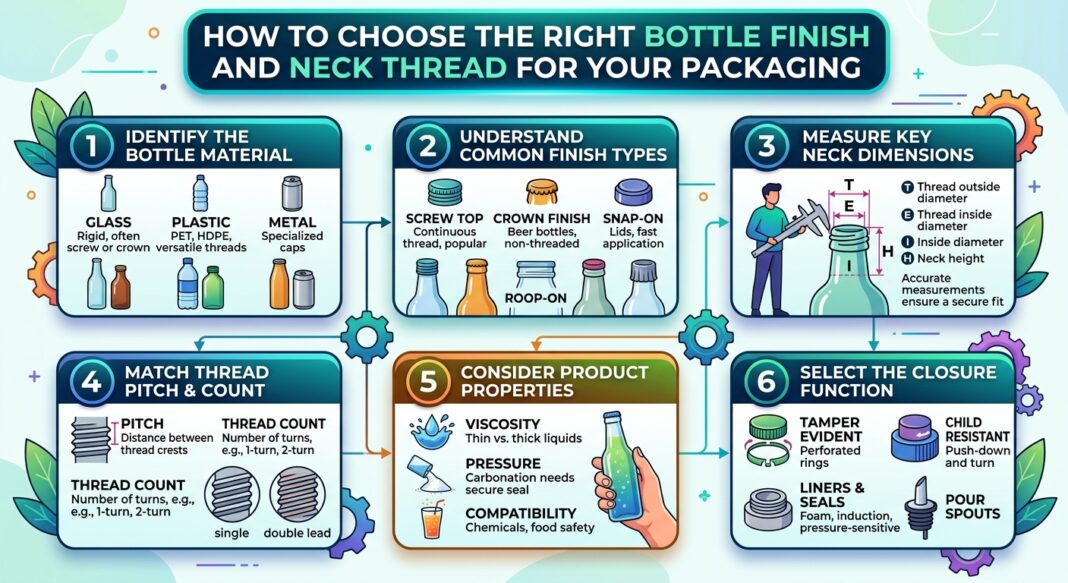
In addition to shape and appearance, it’s crucial to choose the right glass bottle. The bottle finish and neck thread is a significant contributing factor to product protection, filling efficiency, sealing performance and customer experience. If the bottle and closure do not fit well, it can cause leakages, contamination or damage to the product when being transported.
Technical specifications are becoming more important with the ever-changing packaging regulations, and manufacturers and brand owners are becoming more mindful of these specifics, as they can make packaging more reliable and less wasteful. The knowledge of bottle finishes makes the selection of the packaging more feasible that helps in achieving production targets as well as product quality. A reliable glass bottle neck finish guide can help businesses understand the differences between finish types and select the most suitable option for their application.
Why Bottle Finish Matters
The top part of the bottle where the end of the bottle meets with the cap is the bottle finish. While it’s a small component of the package, it’s a big influence on how it will seal and product safety.
Various finish designs are developed for the various closure systems. There are various bottle finishes that are compatible with different screw caps, corks, tamper evident caps and specialty closures. Careful choice of the finish guarantees a good seal and facilitates filling and capping on production lines.
A good finish also makes the product more convenient to use for consumers. Easily openable and closable closure that keeps the product fresh during the product life. Just taking the time to choose the right finish will minimise package failures and enhance customer satisfaction.
Understanding Neck Thread Specifications
The neck thread needs to be of the same size as the closure. Thread size is important because it will dictate the squeeze fit of the cap, and the tightness of seal during storage and transportation.
Many brands of bottles have standard sizes. They provide a good guideline for manufacturers to be able to purchase bottles and closures from multiple suppliers that can be used in the same bottle without compromising performance.
Product viscosity, filling temperature, transportation conditions and the shelf life are some factors that affect the choice of thread. Higher sealing performance might be needed for products that contain alcohol, oils or sensitive ingredients, especially compared to regular products.
Collaborating with knowledgeable packaging suppliers is a great way for businesses to determine the right specs prior to production. Careful planning will avoid costly problems with compatibility.
Matching Packaging to Product Requirements
There are different packaging requirements for each product. A food bottle or cosmetic bottle is different from a liquor bottle.A food container or cosmetic bottle are not as sealed as a premium liquor bottle. The first step in choosing the right finish is to know about the product.
Filling processes, storage, distribution channels and consumers’ usage should be considered by manufacturers. The factors which affect these are the type of closure and resulting bottle finish.
Experienced suppliers who specialize in providing Ruisen custom glass packaging can be beneficial for businesses looking for specialized solutions that meet their specific requirements. Custom options enable brands to combine appealing bottle designs with functional finishes on the neck which can help to both protect and enhance the look of their bottles.
Long-term performance testing of complete bottle/closure systems prior to full-scale production continues to be one of the best methods for ensuring long-term performance.
Common Mistakes to Avoid
A lot of packaging issues stem from the simple specification mistakes. A frequent error is due to the choice of a bottle without checking if it is compatible with closures.
Another problem is that components made under various manufacturers standards are combined. Just minor variations in the dimension of the threads can lead to poor sealing, leakage or uneven torque when capping.
Lack of consideration for road and ferry conditions can also pose issues. When stored in hot or cold conditions or if exposed to rough handling, bottles must have secure sealing systems that will keep them intact throughout the supply chain.
Expansion in production should also be kept in mind when developing packaging. Standardised bottle finishes can make bottle sourcing much easier, and help to reduce operational costs in the long-term.
Businesses can save themselves a lot of unnecessary production delay by checking out technical specifications early in the design phase, which will increase the uniformity of packaging.
Conclusion
The bottle finish and threads which fit around the neck of the bottle seem to be minor packaging considerations but actually play a big role in the product quality, manufacturing productivity and customer satisfaction. When bottles and closures are compatible, they can prevent product leaks, aid in production and protect the product during distribution.
Good packaging decisions take a combination of know-how and planning. Product testing can help manufacturers determine if the product best meets the requirements, industry standards and closure compatibility.
With ongoing advances in packaging technology, companies with an eye for a well-designed package that serves a specific purpose will have the upper hand in meeting the ever-evolving market demands. The smart choice of the finish today will lead to a better foundation for successful packaging and the brand’s future.