



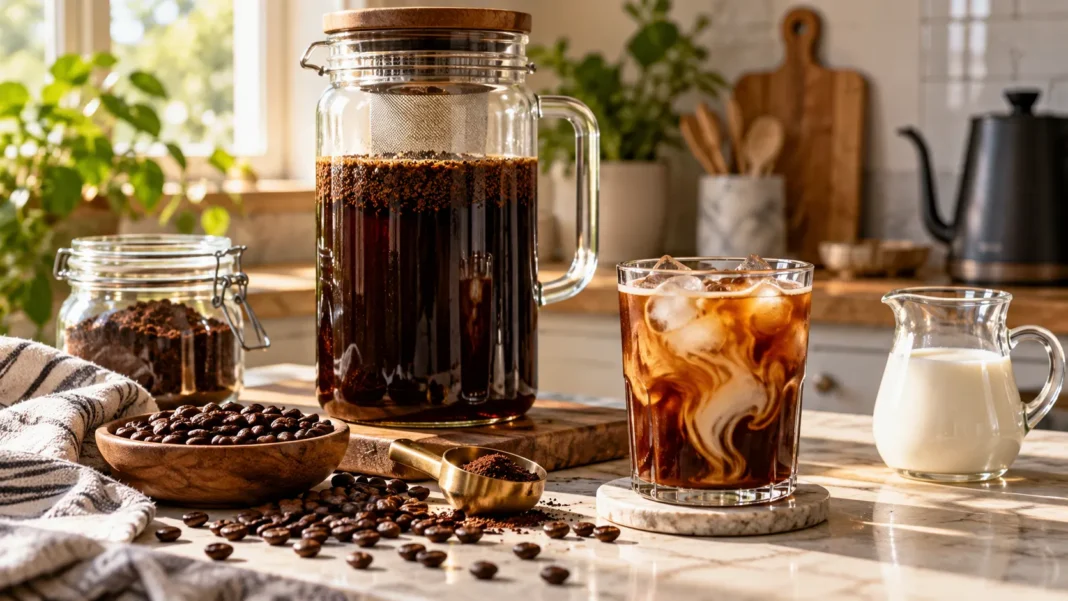
Learning how to make cold brew coffee at home is easier than you might think. You don’t need expensive equipment, professional brewing skills, or a complicated coffee machine to prepare a smooth and refreshing drink. With freshly ground coffee, cold water, and a little patience, you can create delicious homemade cold brew that tastes similar to your favorite coffee shop beverage.
Unlike traditional iced coffee, cold brew is prepared by steeping coffee grounds in cool or room-temperature water for several hours. This slow extraction produces a distinctive flavor that many coffee lovers describe as smooth, mellow, and naturally sweet. It’s also a convenient option for anyone who enjoys preparing coffee ahead of time.
Whether you’re new to home brewing or looking to improve your existing recipe, understanding the right coffee-to-water ratio, grind size, and steeping time can make a noticeable difference. This guide explains everything from choosing coffee beans to filtering, storing, and serving your cold brew. You’ll also discover practical tips for avoiding common mistakes and customizing your drink.
What Is Cold Brew Coffee and How Does It Work?
Cold brew coffee is made by soaking ground coffee beans in cold or room-temperature water for an extended period. Instead of using hot water to extract flavor quickly, this brewing method relies on time. The result is a coffee beverage with a different flavor profile from traditionally brewed hot coffee.
During the steeping process, water gradually extracts soluble compounds from the coffee grounds. The lower brewing temperature changes the extraction of certain acids, oils, and flavor compounds. Many people find that cold brew tastes less sharp or bitter than hot-brewed coffee, although the final flavor depends on the beans and preparation method.
Cold brew can be prepared as a ready-to-drink beverage or as a stronger coffee concentrate. Concentrated versions are typically diluted with water, milk, or another preferred liquid before serving. Understanding this difference is important because coffee strength and caffeine content can vary significantly depending on the brewing recipe.
Cold Brew Coffee vs. Iced Coffee: What’s the Difference?
Cold brew coffee and iced coffee are both served chilled, but they use different preparation methods. Cold brew is extracted using cool water over several hours, while iced coffee usually begins as hot-brewed coffee that is cooled or poured over ice. These methods produce noticeably different flavor characteristics.
Traditional iced coffee often retains the brighter acidity and aromatic qualities associated with hot brewing. Cold brew, on the other hand, frequently has a smoother, rounder taste with chocolatey or nutty notes. However, flavor varies according to coffee origin, roast level, grind size, and brewing conditions.
Another important difference involves preparation time and convenience. Iced coffee can be made relatively quickly if you already have brewed coffee available. Cold brew requires advance preparation, but making a larger batch allows you to enjoy chilled coffee over several days without brewing a fresh cup each morning.
Ingredients Needed to Make Cold Brew Coffee at Home
One of the biggest advantages of homemade cold brew coffee is its short ingredient list. You only need ground coffee and clean drinking water to create the base beverage. Optional additions such as milk, ice, sweeteners, and flavorings can be used later according to personal taste.
For the best flavor, choose coffee beans that are fresh and stored properly. Whole beans ground shortly before brewing often retain more aroma than coffee that has been sitting in an open package. A coarse grind is generally recommended because it makes filtering easier and reduces the amount of fine sediment.
Water quality also plays an important role in the finished drink. Filtered water can help produce a cleaner flavor, especially in areas where tap water has a noticeable mineral or chlorine taste. Since water makes up most of the beverage, using clean, pleasant-tasting water is a simple way to improve your results.
Basic Ingredients for Homemade Cold Brew
- 100 grams of coarsely ground coffee
- 800 milliliters of filtered water
- Ice cubes for serving
- Milk or a preferred milk alternative, optional
- Sugar or another sweetener, optional
This recipe makes approximately three to four servings, depending on how much liquid the coffee grounds absorb and your preferred serving size.
Best Coffee Beans for Making Cold Brew
Choosing suitable coffee beans can help you create a cold brew that matches your flavor preferences. Medium and dark roasts are popular because they often provide chocolatey, caramel-like, and nutty flavor notes. However, lighter roasts can also produce enjoyable cold brew with brighter and more fruit-forward characteristics.
Coffee origin influences the flavors you may notice in your homemade beverage. Beans from different growing regions can have distinct aromatic qualities depending on variety, processing, roasting, and storage. Experimenting with several coffee types is a useful way to discover which flavors you enjoy most.
You don’t need the most expensive specialty beans to prepare good cold brew at home. Freshness, appropriate grinding, and a consistent brewing method often matter more than price alone. Start with a coffee you already enjoy, then adjust your recipe as you become familiar with the brewing process.
What Is the Best Coffee-to-Water Ratio for Cold Brew?
The coffee-to-water ratio determines much of the strength and flavor of your homemade cold brew. A useful starting point for a ready-to-drink recipe is approximately one part coffee to eight parts water by weight. For example, combining 100 grams of coffee with 800 grams of water creates a balanced starting mixture.
Some people prefer to prepare stronger cold brew concentrate instead of a ready-to-drink beverage. A ratio of approximately one part coffee to four parts water can create a more concentrated brew, although the final strength depends on several brewing variables. Concentrates are generally diluted before drinking because they can contain substantial amounts of caffeine.
The ideal ratio depends on your coffee beans, grind size, steeping time, and preferred flavor. If the finished drink tastes too strong, add water or milk to the prepared coffee. If it seems too weak, adjust the coffee quantity in your next batch rather than extending the steeping time indefinitely.
How to Make Cold Brew Coffee at Home: Step-by-Step Guide
Making cold brew coffee at home doesn’t require complicated equipment or advanced techniques. A clean jar, coarsely ground coffee, filtered water, and a suitable strainer are enough to begin. Following a consistent process helps you achieve repeatable results and makes it easier to identify adjustments that improve the flavor.
The most important parts of preparation are measuring the ingredients accurately, allowing adequate extraction time, and filtering the coffee carefully. Skipping one of these steps can affect the strength, clarity, or smoothness of your drink. Using the same basic method each time allows you to compare different beans and brewing ratios.
Before starting, make sure your container and utensils are thoroughly clean. Good hygiene is particularly important because cold brew is prepared without the hot-water brewing process. Keep the mixture refrigerated while it steeps to maintain a consistent, food-safe preparation routine.
Step 1: Grind Your Coffee Beans
Grind your chosen coffee beans to a coarse consistency, similar to rough breadcrumbs. A burr grinder can provide more consistent results than some blade grinders, although either may work with careful adjustment. Avoid grinding the beans too finely, as excessive coffee particles can make filtering difficult and create a muddy finished beverage.
Step 2: Measure Coffee and Water
Add 100 grams of coarsely ground coffee to a clean glass jar or pitcher. Pour in 800 milliliters of filtered water, following the recommended starting ratio of approximately 1:8. Measuring by weight is helpful because it makes the recipe easier to repeat.
Step 3: Mix the Coffee Grounds
Gently stir the coffee and water until all the grounds are evenly saturated. Make sure no dry clumps remain floating above the liquid. Thorough saturation helps the water interact with the coffee grounds throughout the brewing process.
Step 4: Let the Coffee Steep
Cover the container and place it in the refrigerator for approximately 12 to 18 hours. A shorter brewing period may create a lighter flavor, while a longer extraction can produce a more developed and stronger-tasting beverage. Start with 16 hours and adjust future batches according to your preference.
Step 5: Filter the Cold Brew
After steeping, pour the mixture through a fine-mesh strainer to remove the larger coffee grounds. For a clearer drink, filter it again through a paper coffee filter or a suitable coffee-filtering cloth. Filtering slowly can help reduce the amount of fine sediment in the finished coffee.
Step 6: Serve and Enjoy
Pour the filtered cold brew into a glass filled with ice. If you prefer a creamier beverage, add milk or your preferred milk alternative. Taste the coffee before adding sweeteners so you can appreciate its natural flavor and adjust the drink to your liking.
How Long Should You Steep Cold Brew Coffee?
Cold brew steeping time affects how much flavor is extracted from the coffee grounds. Many home recipes recommend approximately 12 to 18 hours when brewing in the refrigerator. However, the best duration depends on grind size, coffee origin, roast level, and the strength you want.
A shorter steeping period can create a lighter drink with less intense extraction. Longer steeping may produce a stronger flavor, but leaving coffee grounds in water indefinitely does not guarantee better results. Excessively long extraction can sometimes introduce undesirable woody or bitter notes.
For beginners, starting with a 16-hour refrigerated brewing period is a practical approach. Taste the filtered coffee and consider whether it needs more intensity or a lighter finish. Keep notes about the beans, ratio, and steeping time so you can make useful adjustments in future batches.
How to Make Cold Brew Without a Coffee Maker
You don’t need a dedicated cold brew coffee maker to prepare a refreshing homemade drink. A mason jar, large glass container, or pitcher works well for the steeping process. As long as the container is food-safe, clean, and large enough for your ingredients, specialized brewing equipment is optional.
Start by combining coarse coffee grounds and filtered water in your chosen container. Cover it and refrigerate the mixture for the desired steeping period. Once brewing is complete, separate the liquid from the grounds using a fine-mesh strainer and an additional coffee filter if necessary.
This simple method is ideal for people who want to experiment with homemade coffee without purchasing additional appliances. It also makes cleanup relatively straightforward because only a few utensils are involved. A reusable filter can reduce disposable waste, provided it is cleaned and dried thoroughly after each use.
How to Make Cold Brew Coffee Concentrate
Cold brew concentrate is a stronger version of the beverage that is generally diluted before serving. To prepare it, increase the amount of ground coffee relative to water. A common starting ratio is one part coffee to four parts water by weight, although extraction results vary.
For example, combine 150 grams of coarsely ground coffee with 600 milliliters of filtered water. Stir the ingredients thoroughly, cover the container, and refrigerate for approximately 12 to 18 hours. After steeping, filter the mixture carefully to remove all visible coffee grounds and fine particles.
When serving, begin by mixing one part concentrate with one part water or milk, then adjust according to taste. This dilution guideline is not a reliable measure of caffeine content, which can vary widely. If you’re sensitive to caffeine, choose smaller servings or use decaffeinated beans instead.
How to Make Cold Brew Coffee Taste Better
Improving cold brew flavor often begins with choosing fresh coffee beans and using an appropriate grind size. Coffee that is extremely old or poorly stored may produce flat, stale flavors regardless of the brewing method. Keeping beans in an airtight container away from excess moisture, heat, and light can help preserve freshness.
Experimenting with water quality and brewing ratios can also improve your results. If your coffee tastes overly intense, consider adjusting the coffee quantity or dilution. If it tastes weak, try a slightly higher coffee-to-water ratio while keeping your steeping time consistent.
Serving temperature and additions can change the drinking experience as well. Ice, chilled milk, and subtle flavorings can make cold brew more refreshing, especially during warm weather. Begin with small changes so you can understand how each ingredient affects the overall flavor.
Best Milk and Sweetener Options for Cold Brew
Milk adds creaminess and changes the texture of homemade cold brew coffee. Dairy milk, oat milk, almond milk, and soy milk are common choices, each contributing a different flavor and consistency. The best option depends on your personal preferences, dietary needs, and how creamy you want the finished drink.
Sweeteners can also be added, although they aren’t necessary for enjoying cold brew. Simple syrup dissolves easily in cold liquids, making it more convenient than granulated sugar for chilled beverages. You can prepare basic syrup by dissolving sugar in hot water, allowing it to cool, and storing it appropriately.
Flavor additions such as vanilla, cinnamon, or a small amount of cocoa can create interesting variations. These ingredients work particularly well with coffees that already have chocolatey or nutty flavor notes. Start with modest amounts and adjust gradually to avoid overwhelming the natural character of your coffee.
How to Store Homemade Cold Brew Coffee
Proper storage helps preserve the flavor and quality of homemade cold brew. After filtering, transfer the finished beverage into a clean, airtight container and place it in the refrigerator. Keeping the coffee covered limits exposure to surrounding odors and reduces unnecessary handling.
For practical home use, prepare small batches and aim to enjoy refrigerated black cold brew within about three to four days. Freshness and safety depend on preparation hygiene, ingredients, temperature, and storage conditions. Cold brew made with milk or other perishable additions should be refrigerated promptly and handled according to the ingredients’ storage requirements.
Discard any coffee that develops an unusual smell, visible mold, or unexpected appearance. Because harmful microorganisms do not always cause noticeable changes, smell alone cannot confirm that a beverage is safe. Clean equipment, proper refrigeration, and reasonably short storage periods are the best habits for maintaining homemade cold brew quality.
Common Mistakes to Avoid When Making Cold Brew
Using coffee grounds that are too fine is a common mistake when preparing cold brew at home. Finely ground coffee can make filtration difficult and leave unwanted particles in the finished beverage. A coarse, reasonably consistent grind usually makes the brewing and filtering process more manageable.
Another mistake is assuming that longer steeping always creates better coffee. Although extraction increases with time, excessively prolonged brewing can affect flavor balance. Following a reasonable steeping range and adjusting it based on actual tasting results is more reliable than automatically leaving the grounds submerged for an extended period.
Poor cleaning and storage practices can also reduce the quality of homemade coffee. Containers, filters, and utensils should be washed carefully before use, and the mixture should be refrigerated during preparation. Neglecting these steps may introduce contamination or unwanted flavors that compromise the final drink.
Easy Cold Brew Coffee Variations to Try
Vanilla cold brew is a simple variation for anyone who enjoys a subtle, sweet aroma. Prepare your regular cold brew, pour it over ice, and add a small amount of vanilla syrup or extract. A splash of milk can create a creamier texture while complementing the coffee’s natural flavor notes.
For a chocolate-inspired version, mix a little cocoa syrup into the finished cold brew. Stir thoroughly and serve with ice and your preferred milk. This combination works particularly well with medium or dark roast beans that already contain cocoa-like flavor characteristics.
You can also create a cinnamon cold brew by adding a small pinch of ground cinnamon or a cinnamon-infused syrup. Another option is to blend chilled coffee with ice and milk for a refreshing frozen-style drink. These variations allow you to experiment with different flavors without changing the basic brewing method.
Is Homemade Cold Brew Coffee Stronger Than Regular Coffee?
Cold brew coffee can be stronger than regular coffee, but the answer depends on the brewing recipe and serving size. Concentrated cold brew often contains more caffeine per unit of liquid before dilution. However, a diluted serving may contain more, less, or a similar amount of caffeine compared with conventional brewed coffee.
The caffeine level is influenced by the coffee beans, grind size, brewing ratio, extraction time, and final dilution. Cold brew’s smoother flavor can make it seem less intense even when its caffeine concentration is relatively high. Taste alone is therefore not a reliable indicator of caffeine strength.
If you want to reduce caffeine intake, consider using decaffeinated coffee beans or choosing a smaller serving. You can still enjoy the flavor and preparation method without relying on a highly concentrated beverage. Understanding the difference between flavor strength and caffeine content helps you make more informed choices.
Tips for Making Cold Brew Coffee Every Week
Preparing cold brew as part of a weekly routine can make homemade coffee more convenient. Choose a brewing day that fits your schedule and measure enough ingredients for a small batch. Since the coffee needs several hours to steep, starting the process in the evening can make the next day’s preparation easier.
Keeping your equipment organized also reduces unnecessary work. Store your grinder, measuring scale, filters, and brewing container together so they are easy to find. Cleaning everything promptly after use prevents old coffee residue from affecting the flavor of future batches.
Instead of brewing a large amount that may sit in the refrigerator too long, prepare smaller batches more frequently. This approach helps maintain freshness and gives you opportunities to experiment with different coffee beans. With practice, making cold brew at home can become a simple and enjoyable part of your routine.
Conclusion
Learning how to make cold brew coffee at home is a practical way to enjoy a refreshing, smooth-tasting beverage without expensive equipment. With coarsely ground coffee, filtered water, and a suitable container, you can prepare a reliable homemade recipe. Understanding the brewing ratio, steeping time, and filtration process helps create more consistent results.
The beauty of homemade cold brew is its flexibility. You can experiment with different beans, adjust the strength, and add milk or flavorings according to your preferences. Preparing small batches in advance also makes it easier to enjoy chilled coffee without repeating the entire brewing process every morning.
Whether you prefer a simple black cold brew or a creamy flavored version, a little practice can help you discover your favorite combination. Start with the basic recipe, maintain good storage habits, and make gradual adjustments as you learn. The result is a convenient homemade coffee that fits your personal taste and daily routine.
Frequently Asked Questions
How long does it take to make cold brew coffee at home?
Cold brew usually takes approximately 12 to 18 hours to steep in the refrigerator. Preparing the ingredients requires only a few minutes, followed by filtering the coffee before serving.
Can I make cold brew coffee with regular ground coffee?
Yes, regular ground coffee can be used, although coarse grounds are generally preferable. Finely ground coffee may create more sediment and make filtering difficult, so a suitable coffee filter is especially helpful.
What is the best ratio for homemade cold brew coffee?
A good starting ratio is one part coffee to eight parts water by weight for ready-to-drink cold brew. Stronger concentrates may use a 1:4 ratio and require dilution before serving.
Can I make cold brew coffee without a special machine?
Yes. A clean glass jar, filtered water, coarse coffee grounds, and a fine-mesh strainer are sufficient. A paper or reusable coffee filter can help remove additional sediment.
How long does homemade cold brew last in the refrigerator?
For practical home storage, aim to drink homemade black cold brew within three to four days. Keep it refrigerated in a clean, airtight container, and use extra care with milk-based versions.



[…] How to Make Cold Brew Coffee at Home […]