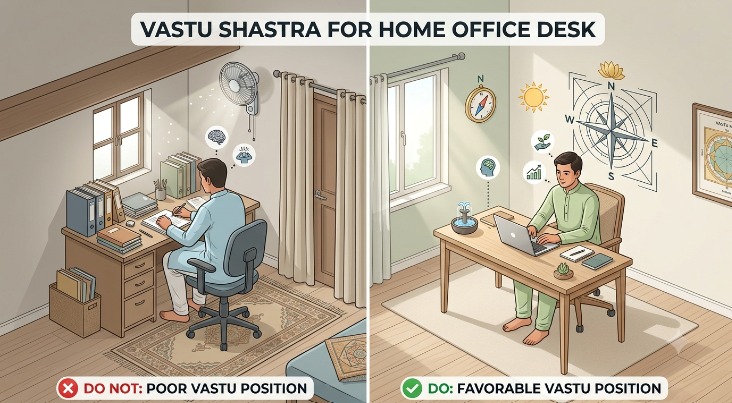
Working from home has become a regular part of modern life. Whether you have a dedicated home office or a small work corner in your bedroom or living room, the way you arrange your workspace can influence how comfortable and organized it feels.
According to Vastu Shastra, the direction and placement of your office desk, seating position, lighting, and surrounding environment can be considered when creating a positive workspace. While Vastu is a traditional practice rather than a scientifically proven system, many people follow these principles when designing their homes and workspaces.
If you are planning a home office, here are some practical Vastu tips to help you create a comfortable and productive workspace.
1. Choose the Right Direction for Your Office Desk
According to traditional Vastu principles, the direction in which you face while working is important.
North Direction
Facing north is traditionally associated with career growth, opportunities, and financial progress. It can be considered for workspaces involving business, finance, or professional activities.
East Direction
Facing east is often associated with new ideas, learning, concentration, and creativity. It can be a suitable option for students, writers, designers, and people involved in creative work.
West Direction
West-facing workspaces may also be considered, particularly when the room layout does not allow an east- or north-facing desk.
The most important factor is still creating a workspace that gives you enough light, ventilation, legroom, and comfort.
2. Place the Desk in a Stable Position
Avoid positioning your desk in the middle of a busy walkway or directly in front of a frequently used door.
Ideally, place the desk in a location where you have a clear view of the room and can work without frequent distractions.
According to Vastu, having a solid wall behind your seating position is traditionally considered supportive because it provides a sense of stability.
3. Avoid Sitting With Your Back Directly Toward the Door
If possible, avoid arranging your office desk so that your back faces the entrance.
A better arrangement is to position the desk so you can see the door while working without sitting directly in line with it.
From a practical perspective, this can also make you feel more aware of movement around the room and reduce distractions caused by unexpected activity behind you.
4. Keep Your Home Office Clutter-Free
A clean workspace can make it easier to focus and organize your daily tasks.
According to Vastu practices, unnecessary clutter can create a feeling of disorder in the workspace. From a practical perspective, an organized desk also makes it easier to find important documents and maintain concentration.
Keep only frequently used items on your desk and organize cables, stationery, files, and accessories.
5. Choose the Right Office Desk Shape
A rectangular or square desk is commonly preferred in Vastu-inspired office setups.
Choose a desk with a sturdy structure and a comfortable working surface. Avoid unnecessarily complicated shapes if they make it difficult to arrange your computer, keyboard, documents, and other essentials.
A metal office desk can be a practical option if you want a strong and durable workstation that can handle regular use.
6. Pay Attention to Your Sitting Position
Your sitting position is just as important as the desk’s direction.
Make sure:
- Your feet can rest comfortably on the floor.
- Your knees have enough space underneath the desk.
- Your chair provides adequate back support.
- Your monitor is positioned at a comfortable viewing height.
- Your keyboard and mouse are easy to reach.
- You can maintain a relaxed posture while working.
A Vastu-friendly workspace should also be a comfortable workspace.
7. Use Natural Light Whenever Possible
Natural light can make your home office feel brighter and more inviting.
If possible, place your desk near a window while avoiding direct glare on your computer screen. Use curtains or blinds to control harsh sunlight during the day.
For areas with limited natural light, use adequate artificial lighting so that you do not have to strain your eyes while working.
8. Keep Electronic Devices Organized
Computers, monitors, chargers, routers, and other electronics can quickly make a workspace look messy.
Keep cables organized and avoid allowing wires to become tangled around your feet.
If you use a desktop computer, keep the monitor, CPU, keyboard, and other accessories arranged so that your workspace remains functional.
9. Add Plants to Your Workspace
Adding indoor plants can make a home office feel more refreshing and connected to nature.
Small plants can be placed on a nearby shelf or in a corner without taking up valuable desk space.
If you follow Vastu principles, you can choose plants according to your preferred Vastu guidance. From a practical perspective, choose plants that are suitable for indoor conditions and the amount of sunlight available.
10. Avoid Overloading the Desk
A large desk does not necessarily mean you should fill every available space.
Keep your computer, notebook, stationery, and other daily essentials organized. Avoid stacking unnecessary papers and unused items on the work surface.
A spacious tabletop can make it easier to focus and switch between different tasks.
11. Choose Colours Carefully
Colours can influence how a workspace feels. Many people prefer light and neutral shades for home offices because they create a clean and calm atmosphere.
White, cream, light grey, beige, and other subtle tones can work well with different furniture styles.
If you follow Vastu, you can also select colours based on traditional Vastu recommendations for the direction and purpose of the room.
12. Keep Important Documents Organized
Important files, bills, certificates, notebooks, and office documents should have a designated storage area.
Instead of allowing paperwork to accumulate on the desk, use drawers, shelves, file organizers, or storage cabinets.
This keeps the workstation cleaner and makes important documents easier to locate.
13. Avoid Placing the Desk Too Close to the Bed
If your home office is inside the bedroom, try to create some separation between your sleeping and working areas.
A dedicated work corner can help establish a clear distinction between work and relaxation.
If space is limited, a compact computer table can help create a functional workspace without taking up too much room.
14. Keep the Area Behind Your Chair Clear
Your chair should have enough space for comfortable movement.
Avoid placing the chair directly against furniture, storage boxes, or other obstacles.
According to traditional Vastu beliefs, a solid wall behind the chair is often preferred. Practically, it can also help create a defined workstation and prevent interruptions from behind.
15. Choose Furniture Based on Your Space
Vastu principles should not come at the expense of functionality.
When selecting furniture, consider:
- Room size
- Desk dimensions
- Storage requirements
- Chair height
- Computer setup
- Available walking space
- Lighting and ventilation
For compact homes, space-saving furniture can make your office setup more practical.
A well-designed HoneyTouch computer table can be used to create a dedicated workspace while keeping your room organized and functional.
Simple Vastu Home Office Setup
If you are starting from scratch, you can follow this simple approach:
Step 1: Select a quiet and well-lit corner of your home.
Step 2: Place the desk in a position that allows comfortable working and, where possible, lets you face north or east.
Step 3: Keep a solid wall behind your seating position if the room layout allows it.
Step 4: Ensure your computer and monitor are positioned comfortably.
Step 5: Organize cables, documents, and stationery.
Step 6: Add suitable lighting and a small indoor plant if desired.
Step 7: Keep the entire workspace clean and clutter-free.
Final Thoughts
A productive home office is about more than following a particular direction. Your workspace should combine comfort, organization, good lighting, ergonomics, and personal preferences.
If you follow Vastu Shastra, you can incorporate traditional principles such as choosing a suitable desk direction, maintaining a clear workspace, and creating a stable seating arrangement. At the same time, make sure your desk and furniture provide enough space for your computer, documents, and everyday work requirements.
With the right computer table, comfortable chair, organized setup, and clutter-free environment, you can create a home office that feels both practical and inviting.
HoneyTouch offers practical furniture solutions designed for modern homes, helping you make better use of your available space while creating comfortable work and study areas.