


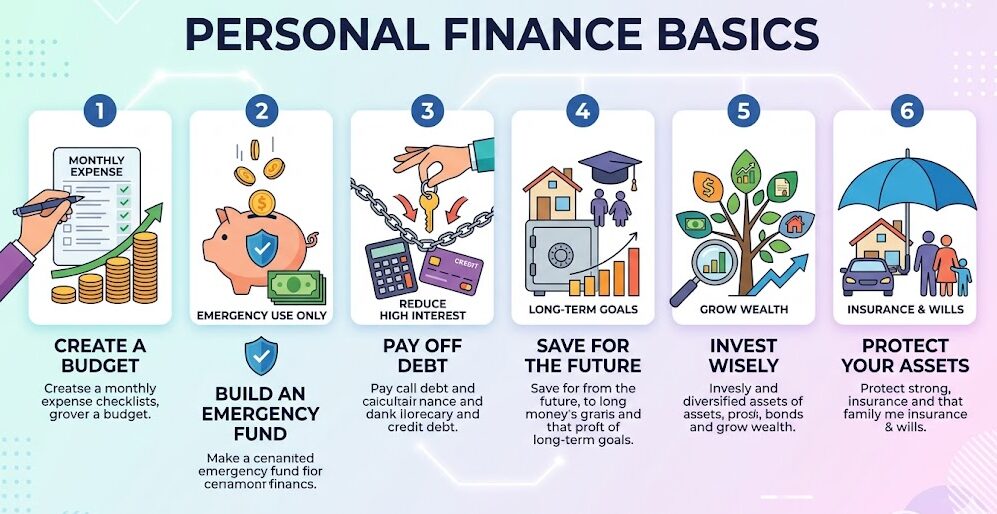
Personal finance basics encompasses a range of financial activities, skills, and knowledge that people need to effectively manage their money. For beginners, comprehending the foundational principles of personal finance is crucial to establishing a stable financial future. At the heart of personal finance are three essential activities: budgeting, saving, and managing debt. Budgeting serves as the roadmap to financial success. It involves tracking income and expenses to create a spending plan that ensures expenditures do not exceed income. This practice not only helps in avoiding debt but also enables individuals to allocate funds towards savings and investments. Key budgeting categories include fixed expenses, such as housing and utilities, and variable expenses, such as groceries and entertainment.
Saving is another cornerstone of personal finance, providing a buffer against unforeseen circumstances and enabling future investments. Establishing an emergency fund, typically covering three to six months’ worth of living expenses, is a primary focus for beginners. Additionally, individuals should consider saving for specific goals, such as a down payment on a home or retirement.
Managing debt is equally vital. Before making significant purchases, it is essential to have a clear understanding of liabilities, which are financial obligations that must be repaid. By evaluating debt levels relative to income, individuals can determine their debt-to-income ratio, a key metric used by lenders to assess an individual’s creditworthiness.
Furthermore, understanding key financial terms such as assets—valuable resources owned—and equity, which represents the ownership value in an asset, can empower individuals to evaluate their financial situations accurately. This foundational knowledge creates a strong basis for diving deeper into various aspects of personal finance in future discussions.
Creating a Budget: Steps to Financial Control
Establishing a budget is a fundamental step towards achieving personal finance basics control and stability. A personal budget allows individuals to track their income and expenses, set realistic financial goals, and adapt to changing life circumstances. To effectively create a budget, one can follow a systematic approach that includes various budgeting methods.
One popular method is the 50/30/20 rule. This principle recommends allocating 50% of your after-tax income to necessities, 30% to discretionary spending, and 20% to savings and debt repayment. It’s a straightforward guideline that simplifies budgeting for many beginners and enables them to prioritize their spending and savings effectively.
Another approach is zero-based budgeting, where every dollar of income must be assigned a specific purpose, ensuring that income minus expenses equals zero at the end of the month. This method encourages intensive scrutiny of spending habits and empowers individuals to identify areas where adjustments can be made to enhance financial health.
The envelope method is also noteworthy, especially for those who prefer a tangible approach to budgeting. This technique involves dividing cash into envelopes designated for specific spending categories, allowing individuals to visually monitor their spending and avoid exceeding their budgeted amount.
Tracking expenses is critical when creating a budget. Recording every purchase can be facilitated via apps, spreadsheets, or even a simple notebook, providing insight into spending habits. Additionally, setting realistic financial goals—whether it be saving for an emergency fund, paying off debt, or preparing for retirement—helps individuals remain focused and motivated.
As life circumstances change, so should the budget. Regularly reviewing and adjusting the budget ensures it continues to reflect current financial situations and goals. By embracing these budgeting strategies, individuals will gain valuable skills to enhance their financial management and achieve greater control over their financial future.
Saving and Investing: Building Wealth for the Future
Savings and investments play a crucial role in achieving long-term financial stability. For beginners, understanding the various options available is essential to successfully grow wealth over time. One of the fundamental steps in this journey is to establish a savings account, which serves as a safe place to store money while earning a modest interest rate. High-yield savings accounts are particularly advantageous as they offer higher returns than standard accounts, making them an excellent choice for financial growth.
In addition to a traditional savings account, creating an emergency fund should be a priority. This fund should ideally cover three to six months of living expenses and provides a financial cushion against unforeseen circumstances, such as job loss or medical emergencies. Having this safety net allows individuals to navigate life’s uncertainties without derailing their long-term financial plans.
Next, it is crucial to consider introductory investment options that can help build wealth over time. Stocks, bonds, and mutual funds are popular choices for beginners. Stocks represent shares in a company and can offer significant returns, albeit with higher risk. Bonds, conversely, are generally considered safer investments that provide periodic interest payments. Mutual funds allow investors to pool their money and diversify across various assets, which can mitigate risk.
Furthermore, understanding the concept of compound interest is vital. This type of interest is earned not only on the initial investment but also on the accumulated interest from previous periods, leading to exponential growth over time. To fully capitalize on this, consider setting up retirement accounts, such as an IRA or 401(k), which offer tax advantages and can significantly enhance retirement savings. By effectively saving and investing, beginners can take proactive steps toward securing a stable financial future.
Avoiding Common Financial Pitfalls
As personal finance basics novices embark upon their personal finance journeys, it is crucial to be aware of common pitfalls that can derail their progress. One of the most significant issues beginners face is overspending, which can occur when individuals fail to adhere to a budget. Without a clear spending plan, it is easy for expenses to spiral out of control, leading to financial strain. Maintaining a comprehensive budget enables better tracking of income and expenditures, empowering individuals to identify areas where they can cut back.
Credit card debt is another substantial personal finance basics trap. Beginners may be lulled by the convenience of credit cards, leading to the accumulation of balances that can become overwhelming. It is essential to understand how interest rates work and the impact they have on outstanding balances. To mitigate this risk, one might consider making only necessary purchases and paying off the balance each month. This approach not only helps to avoid interest charges but also improves credit scores.
Neglecting to save for retirement is a prevalent oversight among those new to personal finance. Many individuals underestimate the importance of compound interest and the benefit of starting early. By setting aside a portion of their income into retirement accounts, individuals can take advantage of tax benefits and employer matching contributions. This strategic saving can significantly enhance financial security in later years.
To navigate these pitfalls effectively, continuous education in personal finance is paramount. Engaging in regular reading, attending workshops, or even seeking guidance from financial advisors can equip individuals with tools to adapt to an ever-evolving financial landscape. Staying informed not only empowers better decision-making but also fosters a proactive approach to managing finances.