



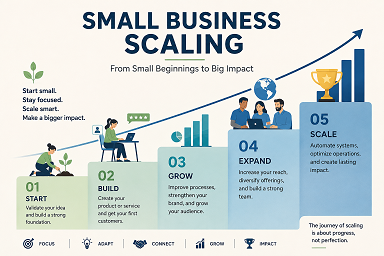
Scaling a small business entails more than simply increasing its size and presence in the marketplace. The concept of scalability refers to the ability of a business to expand its operations and customer base without being constrained by its current capacity. While growth focuses on the quantitative increase in sales, employees, or locations, scaling emphasizes the efficiency and effectiveness with which a business can adapt to increasing demand. To illustrate, consider the operational aspect of scalability. A business that can seamlessly integrate new technologies or workflows stands a better chance of scaling effectively compared to one reliant on outdated processes. Likewise, the ability to acquire a larger customer base without proportional increases in costs or resources is essential for successful scaling. This is where strategies such as automation and digital marketing play critical roles, making it possible to reach and serve more customers while maintaining quality and control.
Scalability is not only crucial for immediate operational demands but also for long-term sustainability and success. As markets evolve and competition intensifies, a scalable business can pivot and respond to changes without significant setbacks. Moreover, investors and stakeholders often look for scalable ventures, as they signal the potential for future profitability and market capture.
Despite its importance, there are common misconceptions around scaling. Many assume that scaling a small business naturally follows growth, but this is not always the case. In reality, a lack of solid infrastructure, unrefined processes, or insufficient market understanding can hinder scalability efforts. Recognizing these distinctions is vital for business owners who aim to scale successfully, ensuring they focus on building robust systems that support sustainable growth over the long term.
Identifying Your Business’s Scalability Potential
Assessing a business’s scalability potential involves a multifaceted approach that incorporates several key indicators. Understanding these indicators is essential for entrepreneurs and business owners aiming to expand their operations effectively. The following criteria are critical in this assessment:
Market Demand: One of the primary indicators of scalability is the existence of a robust market demand for the product or service offered. This demand can be evaluated through market research, which helps identify target demographics, buying behaviors, and growth trends within the industry. A business positioned in a high-demand market is more likely to scale successfully, as there will be a continual influx of customers seeking its offerings.
Operational Efficiency: Another vital criterion is operational efficiency. Businesses showing streamlined processes and high productivity levels are more equipped to manage increased sales volumes without a corresponding rise in operational costs. Evaluating processes to identify bottlenecks or inefficiencies can reveal areas that need improvement. Implementing systems, such as automation tools or efficient workflows, can lead to enhanced scalability.
Resource Availability: Assessing the availability of resources—both human and financial—is crucial. A business must have the necessary capital to invest in growth initiatives, such as marketing or inventory, as well as skilled personnel who can handle expanded responsibilities. Without adequate resources, scaling efforts may be hampered, leading to disappointing outcomes.
Additionally, analyzing current performance metrics such as sales growth, customer retention rates, and profit margins is instrumental in determining scalability potential. These metrics provide insight into how well the business is performing and where challenges may lie. By taking a comprehensive look at these indicators, business owners can better assess their situation and devise strategic plans for successful scaling.
Developing a Strategic Growth Plan
Creating a strategic growth plan is essential for any small business aiming to scale successfully. Such a plan serves as a roadmap, providing direction and clarity on how to achieve business objectives. The first step in crafting an effective growth plan is to establish specific, measurable, achievable, relevant, and time-bound (SMART) objectives. These objectives will help to provide a clear focus for your growth efforts, ensuring that all stakeholders understand the goals and can work toward them cohesively.
Once the SMART objectives are in place, the next aspect to consider is resource allocation. This includes determining how to effectively utilize your available workforce, technology, and capital. A well-thought-out allocation of resources is fundamental to scaling operations while maintaining quality and service standards. An assessment of current resources will allow for identification of any additional needs required for sustained growth. It also supports making informed decisions regarding investment or development in new infrastructure.
Financial planning is another critical component of your growth strategy. This involves creating a detailed budget that outlines financial projections for different stages of your business scaling. It is advisable to incorporate contingencies into your financial plans to navigate uncertainties or unexpected costs. Moreover, you should conduct a thorough risk management analysis to identify potential risks associated with your growth strategy. This includes evaluating market conditions, competition, and operational challenges that could impact your business objectives.
By prioritizing these elements—SMART objectives, resource allocation, financial planning, and risk management—you can develop a structured growth plan that aligns with your business goals. This strategic approach frames your efforts and enhances your likelihood of success as you work to scale your small business effectively.
Investing in Technology and Infrastructure
In today’s fast-paced business environment, investing in technology and infrastructure is crucial for small businesses aiming to scale successfully. Leveraging the right tools and systems can greatly enhance operational capabilities, streamline processes, and ultimately lead to an improved customer experience. This section will elucidate the types of technology investments that can support your scaling efforts.
One significant area is customer relationship management (CRM) systems. These platforms enable businesses to manage customer interactions and data efficiently. By centralizing customer information, CRM systems allow for better service delivery and personalized communication, which can drive customer loyalty and sales. Additionally, adopting an integrated CRM can facilitate cross-departmental collaboration, fostering a more cohesive operational strategy as the business grows.
Another essential aspect is automation software. Automating repetitive tasks not only saves time but also reduces the risk of human error. Solutions such as marketing automation, inventory management systems, and accounting software help streamline operations, allowing employees to focus on more strategic initiatives. This increased efficiency can accelerate growth while maintaining operational quality.
Furthermore, investing in cybersecurity becomes imperative as businesses expand. Protecting sensitive customer data and securing business operations against cyber threats is crucial in maintaining trust and credibility. Implementing robust security measures as part of the technological framework ensures that scaling does not compromise data integrity.
Moreover, cloud computing technologies enable small businesses to scale their resources dynamically. These services provide flexibility and scalability by allowing companies to access their infrastructure remotely, thus providing a cost-effective solution to support growth without significant upfront expenditures.
In conclusion, strategic investments in technology and infrastructure are fundamental for small businesses seeking to scale effectively. By enhancing operational capabilities and improving customer experiences through appropriate technological tools, businesses position themselves for sustainable growth in a competitive landscape.
Building a Scalable Team Culture
In the journey to scale a small business successfully, the cultivation of a team culture that embraces scalability is paramount. A scalable team culture is one where each member understands the overarching vision of the organization and is motivated to contribute actively towards its growth. This cultural framework is not merely beneficial; it serves as the backbone of any successful scaling effort.
One of the first strategies to consider in building a scalable team is the hiring process. It is essential to recruit individuals who are not just skilled but also resonate with the company’s values and mission. Retaining a workforce that can adapt to changing circumstances and embrace innovation is vital. Implementing a thorough recruitment process that evaluates candidates for cultural fit alongside technical skills can yield remarkable results in fostering a dynamic and engaged team.
Additionally, fostering effective team dynamics plays a significant role in scalability. Teams that collaborate well are more resilient when facing challenges and are often more creative in their problem-solving approaches. Leaders should encourage open communication, recognizing that diverse perspectives can lead to innovative solutions that enhance scalability. Regular team-building activities, whether virtual or in-person, can help strengthen relationships and trust among team members.
Leadership style also impacts the scalability of a business. Transformational leadership, which inspires and motivates employees, can effectively drive a culture of adaptability and resilience. Leaders must empower employees by providing them with opportunities for growth and advancement. Employee training and development programs are essential to ensure the workforce is equipped with the necessary skills to navigate scaling challenges.
By embracing these strategies—focused hiring, promoting team collaboration, and empowering employees through effective leadership—small businesses can cultivate a culture that not only supports growth but thrives in it. This adaptable workforce will be crucial as the organization pursues its expansion goals, thereby aligning with overall business objectives.
Leveraging Marketing and Sales Strategies
In the competitive landscape of small businesses, leveraging effective marketing and sales strategies is essential for successful scaling. One of the foremost techniques includes implementing targeted marketing campaigns. By identifying specific demographics and tailoring marketing messages to these audiences, small businesses can increase customer engagement and drive sales. This approach not only enhances brand visibility but also fosters a deeper connection with potential customers, which is crucial in today’s market.
Another critical aspect of marketing strategy is the adoption of customer relationship management (CRM) systems. These systems facilitate the organization and analysis of customer interactions, allowing businesses to streamline processes and improve customer service. By utilizing CRM tools, small businesses can gain insights into customer preferences and behaviors, which can inform more personalized offerings and enhance the overall customer experience. This level of engagement encourages loyalty, making customers more likely to return.
Furthermore, establishing effective sales funnels is vital for maximizing customer acquisition and retention. A well-structured sales funnel guides potential customers through the buying journey, from awareness to consideration and ultimately, to purchase. Using targeted content and follow-up communications at each stage of the funnel can help convert leads into loyal customers. By continuously analyzing performance metrics, businesses can refine these funnels, ensuring they are optimized for maximum efficiency.
Incorporating these marketing and sales techniques creates a solid foundation for scaling a small business. Through targeted campaigns, effective CRM practices, and well-defined sales funnels, businesses can enhance their marketing efforts, improve customer engagement, and ultimately drive sustainable growth.
Networking and Partnerships for Growth
In the landscape of small business growth, networking and partnerships play a pivotal role in establishing connections that can lead to significant expansion opportunities. Engaging with other businesses allows owners to tap into different markets and demographic segments that may not have been accessible otherwise. The importance of building robust networks cannot be overstated, as they can serve as conduits for collaboration, resource sharing, and problem-solving.
Strategic partnerships, in particular, can amplify growth potential by combining resources and expertise. When small businesses align with larger companies or other budding enterprises, they create a relationship that benefits all parties involved. For instance, a fledgling marketing agency might partner with a local graphic design firm to offer comprehensive services. This synergy not only enhances service offerings but also broadens their customer base, as both businesses can leverage each other’s networks.
Moreover, collaborations can provide access to additional resources that may be financially unfeasible for a small enterprise to acquire independently. Businesses can collaborate to share facilities, technology, or even staff, effectively diminishing operational costs while enhancing service delivery. This strategic approach aids in scaling operations without incurring hefty investments.
Furthermore, partnerships can foster innovation through the amalgamation of diverse skills and knowledge bases. When businesses collaborate, they exchange critical insights that can lead to the development of new products or services. This shared expertise is invaluable as it cultivates an environment of creativity and shared vision, essential elements for growth.
In conclusion, harnessing the power of networking and forming strategic partnerships can significantly facilitate the scaling process for small businesses. By actively pursuing connections and collaborations, businesses not only enhance their market reach but also secure the resources necessary to thrive in a competitive environment.
Monitoring Progress and Adapting Strategies
Monitoring the performance of a small business against established scaling goals is crucial for continued success. Regular assessment provides insight into whether the current strategies are effective, or if adaptations are necessary to meet evolving business demands and market conditions.
One effective method for tracking metrics is the implementation of Key Performance Indicators (KPIs). These indicators should be aligned with the specific scaling objectives of the business. For example, if a business aims to increase customer acquisition, metrics such as customer growth rate, conversion rates, and customer satisfaction scores can be monitored. KPIs offer concrete data that can inform decision-making processes, enabling business owners to evaluate outcomes accurately.
Another approach is conducting regular performance reviews. This process can include analyzing sales data, customer feedback, and operational efficiency. By engaging in quarterly or monthly reviews, business owners and managers can identify trends and patterns that may impact scaling efforts. It is beneficial to document these findings and observe any shifts in the business environment that could necessitate a strategic pivot.
Adaptability is key in the face of rapid market changes. If current strategies are not yielding the desired outcomes, adjustments should be made promptly. For instance, if a particular marketing strategy is not generating sufficient leads, exploring alternative channels or modifying the messaging may be necessary. Utilizing a feedback loop, where customer insights directly inform business strategies, can also help in staying relevant and competitive.
In conclusion, regularly monitoring progress and adapting strategies are essential components for the successful scaling of a small business. By leveraging KPIs, conducting performance reviews, and maintaining flexibility to modify approaches in response to market conditions, entrepreneurs can ensure their growth objectives are met effectively.
Case Studies of Successful Small Business Scaling
Small businesses often provide the backbone of the economy, and many have successfully scaled their operations, serving as inspiration for others in similar positions. One notable example is Airbnb. Founded in 2008, Airbnb began as a small business that aimed to help homeowners rent out spare rooms. By leveraging technology and creating a user-friendly platform, they were able to scale rapidly. Their core strategies included focusing on customer experience, building a strong community, and continuously iterating on their service offerings based on user feedback. The challenges they faced included regulatory issues and competition, but through adaptability and innovation, Airbnb navigated the complexities of the market, ultimately expanding globally.
Another successful case is Warby Parker. Launched in 2010, this eyewear retailer disrupted the traditional retail landscape by offering high-quality, inexpensive glasses directly to consumers online. Their unique value proposition involved a home try-on program, allowing customers to test frames before purchasing. Warby Parker scaled by maintaining a robust online presence while also moving into brick-and-mortar locations. They faced challenges like supply chain logistics and inventory management but overcame these hurdles through strategic partnerships and developing a streamlined business model. Their focus on social responsibility, such as donating a pair of glasses for each pair sold, further solidified their brand identity and consumer loyalty.
Lastly, the story of Dollar Shave Club illustrates effective scaling in the competitive razors market. Established in 2011, they introduced a subscription model that disrupted the industry. Highlighting humor in their marketing campaign, they garnered significant attention, leading to rapid growth. Challenges included dealing with fluctuating consumer preferences and competition from larger brands. The company embraced data analytics to refine its marketing and product offerings, which proved crucial to retaining customers. In 2016, Dollar Shave Club was acquired by Unilever for $1 billion, a testament to its successful scaling strategy.
These case studies showcase different strategies employed by various small businesses and highlight the need for adaptability and a solid understanding of customer needs when attempting to scale.