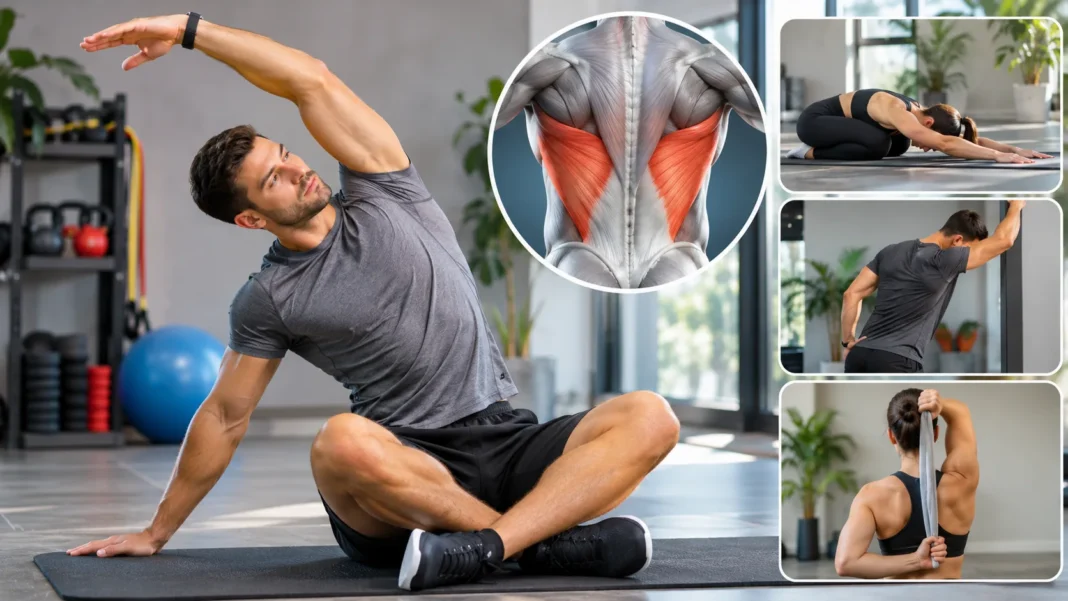
The latissimus dorsi is one of the largest muscles in your back, and it plays an important role in upper-body movement. Whether you reach overhead, pull something toward your body, or perform everyday activities, this muscle helps control your shoulders and arms. When the area feels tight or uncomfortable, certain movements may become more difficult. A gentle stretching routine can help improve comfort and support healthy mobility.
A latissimus dorsi stretch focuses on lengthening the large muscles along the sides of your back. These stretches are commonly used in warm-ups, mobility routines, and some rehabilitation programs. Learning proper technique helps you avoid unnecessary strain while improving comfortable movement. This guide explains the benefits, stretching methods, common mistakes, and practical mobility tips for your lats.
What Is a Latissimus Dorsi Stretch?
A latissimus dorsi stretch is a movement designed to gently lengthen the broad muscles extending across the back. These muscles help connect the upper arm to structures in the lower back and pelvis through their anatomical attachments. Stretching positions commonly involve reaching the arms overhead or moving the trunk away from the targeted side.
The purpose of a lat stretch is to encourage comfortable movement through the shoulders, upper back, and surrounding tissues. Some positions also involve the ribs and trunk because the latissimus dorsi influences several areas of the body. The sensation may be felt along the side of the back or beneath the armpit. Stretching should produce mild tension rather than sharp pain.
Latissimus dorsi stretches are often included in general fitness, yoga, mobility training, and physical therapy routines. They can be adapted for standing, seated, and floor-based positions depending on individual comfort. Some variations require no equipment, while others use a wall or stable support. Choosing an appropriate movement makes stretching accessible to people with different activity levels.
Understanding the Latissimus Dorsi Muscle Anatomy
The latissimus dorsi is a large, flat muscle covering much of the middle and lower back. It originates from several structures, including the lower thoracic spine, thoracolumbar fascia, iliac crest, and sometimes the lower ribs. Its fibers travel upward and outward before attaching to the upper arm bone. This arrangement allows it to influence movement at the shoulder joint.
The muscle contributes to shoulder extension, adduction, and internal rotation. These movements occur when you bring your arm backward, pull it toward your body, or rotate it inward. The lats are especially active during activities such as climbing, rowing, and pulling exercises. They also work alongside other muscles to control upper-body movement.
Because the latissimus dorsi connects different parts of the body, its movement can interact with the shoulder, trunk, and pelvis. However, discomfort in these regions does not automatically indicate tight lats. Shoulder stiffness, back pain, and reduced mobility can have several causes. Understanding the anatomy helps you choose suitable stretches without assuming that one muscle explains every movement limitation.
Benefits of Stretching the Latissimus Dorsi
One potential benefit of latissimus dorsi stretching is improved flexibility around the shoulder and upper back. Regular, comfortable stretching can help maintain or increase available movement over time. This may make reaching overhead or performing certain daily tasks feel easier. Results vary depending on existing mobility, stretching consistency, and other physical factors.
Lat stretches can also provide temporary relief from sensations of muscular tightness. People who spend long periods sitting or performing repetitive movements sometimes notice stiffness around the shoulders and upper back. Gentle stretching may help these areas feel more comfortable. However, stretching is not a guaranteed treatment for pain or a substitute for appropriate medical assessment.
Another benefit is that lat stretching can complement a balanced exercise routine. It encourages awareness of shoulder and trunk movement while offering an opportunity to practice controlled breathing. Stretching can be useful alongside strength training and other mobility exercises. Combining different forms of movement generally supports more complete physical function than focusing exclusively on flexibility.
How to Do a Standing Latissimus Dorsi Stretch
Begin by standing comfortably with your feet approximately hip-width apart. Raise one arm overhead while keeping your shoulders relaxed and your body supported. Slowly lean your upper body toward the opposite side until you feel a gentle stretch along your raised arm and side. Avoid forcing your trunk into an uncomfortable position.
Maintain steady breathing while holding the stretch for approximately 15–30 seconds, if comfortable. Keep your feet grounded and avoid twisting excessively through your lower back. The stretching sensation should remain mild and manageable throughout the position. If discomfort develops in your shoulder or spine, reduce the movement or return to standing.
Slowly return to the starting position and repeat on the opposite side. You may perform one or two comfortable repetitions per side according to your needs. The movement should feel controlled rather than rushed. This standing variation is convenient because it requires no special equipment and can be included in a short mobility break.
Seated Latissimus Dorsi Stretch for Beginners
A seated lat stretch provides a supported alternative for people who prefer not to stretch while standing. Sit on a stable chair with both feet resting comfortably on the floor. Raise one arm overhead and gently move your upper body toward the opposite side. Keep your hips supported by the chair throughout the movement.
You may notice a mild stretching sensation along the side of your back and beneath the raised arm. Avoid pulling forcefully on the shoulder or bending farther than feels comfortable. Keep your neck relaxed and breathe naturally during the position. Returning slowly to an upright posture helps maintain control.
Repeat the movement on the other side using a similar comfortable range. A seated variation can be useful during study sessions, office breaks, or other periods involving extended sitting. However, changing positions and moving regularly are also important for general comfort. Stretching should complement ordinary movement rather than replace it entirely.
Child’s Pose Lat Stretch: Step-by-Step Guide
Child’s pose is a familiar yoga position that can provide a gentle stretch through the back and shoulders. Begin on your hands and knees on a comfortable exercise mat. Slowly move your hips backward toward your heels while reaching your arms forward. Allow your torso to lower only as far as your knees, hips, and back comfortably permit.
To place more emphasis on one side, gradually walk both hands toward the opposite side of the mat. For example, moving your hands to the right may increase the stretching sensation along your left side. Keep the movement gentle and maintain relaxed breathing. Avoid pressing your shoulders or lower back into painful positions.
Hold the position briefly before returning your hands toward the center. You can repeat the movement on the other side if comfortable. People with knee, hip, or shoulder limitations may require modifications or a different stretch. A chair-supported version can sometimes provide a more accessible alternative without requiring kneeling.
Wall Lat Stretch for Better Shoulder Mobility
A wall-supported lat stretch is a practical option for people who prefer additional balance and positioning support. Stand facing a sturdy wall and place your hands against it at a comfortable height. Step backward slightly while allowing your hips to move away from the wall. Gently lower your chest between your arms without forcing the position.
As your upper body moves, you may feel tension through the sides of your back and around your shoulders. Keep your knees slightly bent if that feels more comfortable. Avoid allowing your lower back to arch excessively during the stretch. Adjusting your hand position can help you find a suitable range of motion.
Hold the position for a short, comfortable period before slowly standing upright. If the stretch causes shoulder pinching, numbness, or sharp discomfort, stop and choose another option. This variation may be included in a shoulder mobility routine when appropriate. A stable wall provides support without requiring specialized exercise equipment.
Kneeling Bench Lat Stretch for Flexibility
A kneeling bench stretch is another commonly used latissimus dorsi stretching variation. Begin by kneeling on a padded surface in front of a stable bench or chair. Place your elbows or hands on the support and slowly move your chest downward. Keep your hips relatively stable while allowing your shoulders to move comfortably.
You may feel a stretch around the armpits, upper back, or sides of your torso. Avoid forcing your chest downward or excessively arching your lower back. If kneeling causes discomfort, place additional padding beneath your knees or select a standing variation. The stretching sensation should remain gentle rather than intense.
Return to the starting position slowly after holding the stretch for a comfortable period. The supported position can make it easier to focus on shoulder movement and breathing. However, the stretch is not suitable for everyone, particularly those with certain shoulder or knee conditions. Choose the variation that allows you to maintain the most comfortable control.
How to Stretch Your Lats With a Resistance Band
Resistance bands can be used as positioning aids during certain mobility exercises. However, additional resistance is not necessary to stretch the latissimus dorsi effectively. A gentle, supported movement may be more suitable for beginners. Bands should only be used when their placement and resistance can be controlled safely.
One simple option involves holding a light resistance band between both hands while raising your arms comfortably overhead. Maintain a relaxed grip and avoid pulling the band forcefully apart. You can gently move your arms within a comfortable range to explore shoulder mobility. This movement may involve several muscles rather than isolating the lats.
If a band causes shoulder discomfort or encourages excessive pulling, remove it and perform the movement without equipment. Stretching does not need to feel difficult to be useful. A physical therapist can recommend specific band-assisted exercises when individualized support is needed. Proper movement control matters more than the amount of resistance used.
Latissimus Dorsi Stretch for Tight Shoulders
People experiencing shoulder stiffness sometimes include lat stretching in their mobility routines. Because the latissimus dorsi attaches to the upper arm, it can influence movements involving shoulder elevation and positioning. However, restricted shoulder movement may also involve joints, tendons, or other muscles. Stretching one muscle may not address every underlying cause.
A gentle overhead reach can be a reasonable starting point for exploring comfortable shoulder movement. Raise your arms gradually and avoid forcing them beyond your available range. If you notice a mild stretch along the sides of your back, maintain the position briefly. Stop if you experience sharp pain, catching, or unusual sensations.
Shoulder mobility is influenced by several structures working together. The shoulder joint, shoulder blade, upper back, and surrounding muscles all contribute to reaching movements. Strengthening and controlled mobility exercises may therefore be useful alongside stretching. Persistent restriction or pain deserves professional assessment rather than repeated aggressive attempts to increase flexibility.
Can Lat Stretching Help With Back Pain?
Lat stretching may provide temporary comfort when muscular tightness contributes to back discomfort. Gentle movement can help some people feel less stiff after prolonged sitting or repetitive activity. However, back pain has many possible causes, and the latissimus dorsi is only one potential contributor. Stretching should not be treated as a universal solution.
Some lat stretching positions involve side bending or movement through the lower back. These actions may feel comfortable for certain individuals but aggravate symptoms in others. If you experience back pain during a stretch, reduce the range or stop the movement. Pain should not be ignored simply because an exercise is described as beneficial.
Persistent back pain may require a more complete evaluation of physical activity, strength, mobility, and other health factors. A healthcare professional can help identify appropriate treatment options based on the underlying condition. Sometimes general movement and strengthening are more useful than isolated stretching. A balanced approach supports safer decisions and avoids unnecessary strain.
Latissimus Dorsi Stretch Before and After Exercise
Lat stretching can be included in an exercise warm-up when it suits the planned activity. Before workouts, controlled dynamic movements are often more practical than prolonged stationary stretches. Gentle arm raises, shoulder circles, and comfortable side reaches can help prepare the upper body. The goal is to gradually introduce movement rather than force maximum flexibility.
After exercise, some people prefer slower stretches to relax and maintain comfortable movement. A standing or wall-supported lat stretch may fit into this routine. Holding a gentle position for approximately 15–30 seconds can be reasonable for many people. However, stretching after exercise is not guaranteed to prevent delayed muscle soreness.
The best timing depends on personal preference, exercise goals, and physical condition. Strength training, proper warm-ups, and suitable recovery remain important parts of an overall fitness program. Stretching can support flexibility, but it cannot replace other forms of physical preparation. Choose movements that feel useful and do not interfere with comfortable exercise performance.
Common Mistakes During Latissimus Dorsi Stretching
One common mistake is forcing the arms or torso beyond a comfortable range of motion. Stretching should create mild tension rather than sharp pain or strong pressure around the joints. Excessive force can irritate sensitive tissues and make the movement less comfortable. Slow positioning gives your body time to respond without unnecessary strain.
Another mistake is excessively arching the lower back during overhead stretches. This may occur when shoulder movement is limited and the body compensates through the spine. Keeping the trunk reasonably controlled can help you explore shoulder mobility more comfortably. However, natural spinal movement is not automatically harmful, and no single posture is required for everyone.
Holding your breath or rushing between positions can also reduce movement control. Try breathing naturally and allowing enough time to enter and leave each stretch. Avoid comparing your flexibility with someone else’s range of motion. The purpose of stretching is to support your own comfortable mobility rather than achieve a particular appearance or position.
How Often Should You Stretch Your Latissimus Dorsi?
The appropriate stretching frequency depends on your goals, comfort, and activity routine. Some people include brief lat stretches several times per week, while others prefer gentle daily mobility. There is no single schedule that works for everyone. Consistency is useful, but stretching should not create lingering soreness or increasing discomfort.
For a general flexibility routine, you might begin with one or two comfortable repetitions of a selected stretch. Holding each position for around 15–30 seconds can provide a manageable starting point. Adjust the duration or frequency according to your response. More intense stretching is not necessarily more effective, particularly when movement already feels uncomfortable.
Long-term mobility also depends on regular physical activity and strength through available movement ranges. Stretching alone may not provide every improvement you want. Combining comfortable stretches with suitable strengthening exercises can support balanced upper-body function. If you are recovering from an injury, follow the schedule recommended by your healthcare professional.
When Should You Avoid Latissimus Dorsi Stretches?
Lat stretches should be modified or avoided when they cause sharp pain, unusual weakness, or neurological symptoms. A recent shoulder injury, significant back injury, or recent surgery may require specific movement restrictions. General online exercise instructions cannot account for every medical condition. Individualized guidance is especially important during recovery.
Stop stretching if you experience numbness, tingling, dizziness, or pain spreading into your arm. These symptoms may indicate irritation involving nerves or other structures. Persistent symptoms should be evaluated by a healthcare professional. Do not repeatedly stretch through discomfort in an attempt to force the muscle to relax.
Seek prompt medical attention for severe pain following an injury or sudden loss of normal arm function. Emergency assessment is necessary when shoulder or back discomfort occurs with chest pain, breathing difficulty, or other serious symptoms. For ordinary muscle tightness, gentle movement may be appropriate. Understanding warning signs helps you distinguish routine mobility work from situations requiring medical care.
Best Mobility Tips for Healthy Lats and Shoulders
One useful mobility habit is changing positions regularly throughout the day. Long periods of sitting, studying, or working at a computer can leave the upper body feeling stiff. Brief movement breaks give the shoulders and back opportunities to move through different positions. These breaks do not need to involve complicated exercises.
Strengthening the upper back and shoulders can also complement stretching. Appropriate rowing movements, controlled pulling exercises, and shoulder stabilization activities may help improve movement capacity. The exercises should match your current abilities and available equipment. Strength and flexibility work together to support comfortable motion during everyday activities.
Pay attention to how your body responds to different movements rather than chasing an ideal flexibility standard. A stretch that feels helpful for one person may not suit another. Adjust positioning, duration, and movement range as needed. Consistent, comfortable activity is generally more sustainable than forcing difficult stretches or performing excessive mobility exercises.
Conclusion
The latissimus dorsi stretch is a practical way to explore and maintain comfortable movement through the shoulders, sides of the back, and upper body. Standing, seated, wall-supported, and floor-based variations provide different options for individual needs. Each stretch should involve controlled positioning and mild tension rather than pain. Choosing appropriate movements helps make flexibility training more comfortable.
Regular lat stretching may improve flexibility and temporarily relieve sensations of muscular tightness. However, it is not a guaranteed treatment for shoulder restrictions or back pain. Mobility depends on several muscles, joints, and movement patterns working together. Combining gentle stretches with suitable strengthening and regular physical activity supports a more balanced approach.
The most important principles are comfort, consistency, and attention to symptoms. Start with simple stretches, avoid forceful movements, and adjust positions when necessary. If you experience persistent pain, numbness, weakness, or significant movement limitations, seek professional advice. A thoughtful mobility routine can help you maintain functional movement without unnecessary strain.
Frequently Asked Questions (FAQs)
What Is the Best Stretch for the Latissimus Dorsi?
Standing side reaches, wall-supported stretches, and child’s pose variations can gently stretch the latissimus dorsi. The best option is one that creates comfortable tension without shoulder pain or excessive strain.
How Do You Know if Your Latissimus Dorsi Is Tight?
You may notice a stretching sensation along your sides during overhead reaching or experience limited comfortable shoulder movement. However, these signs are not diagnostic because several muscles and joints influence mobility.
Can Latissimus Dorsi Stretches Help Shoulder Mobility?
Lat stretching may improve shoulder flexibility when limited muscle length contributes to restricted movement. However, shoulder mobility involves multiple structures, so strengthening and other mobility exercises may also be necessary.
How Long Should You Hold a Latissimus Dorsi Stretch?
Holding a gentle lat stretch for approximately 15–30 seconds is a reasonable starting point for many people. Adjust the duration according to comfort, and stop if pain or unusual symptoms develop.
Is It Safe to Stretch Your Lats Every Day?
Gentle daily lat stretching may be comfortable for some people, provided it does not cause pain or lingering soreness. Stretching frequency should reflect personal needs, physical condition, and any professional rehabilitation guidance.