



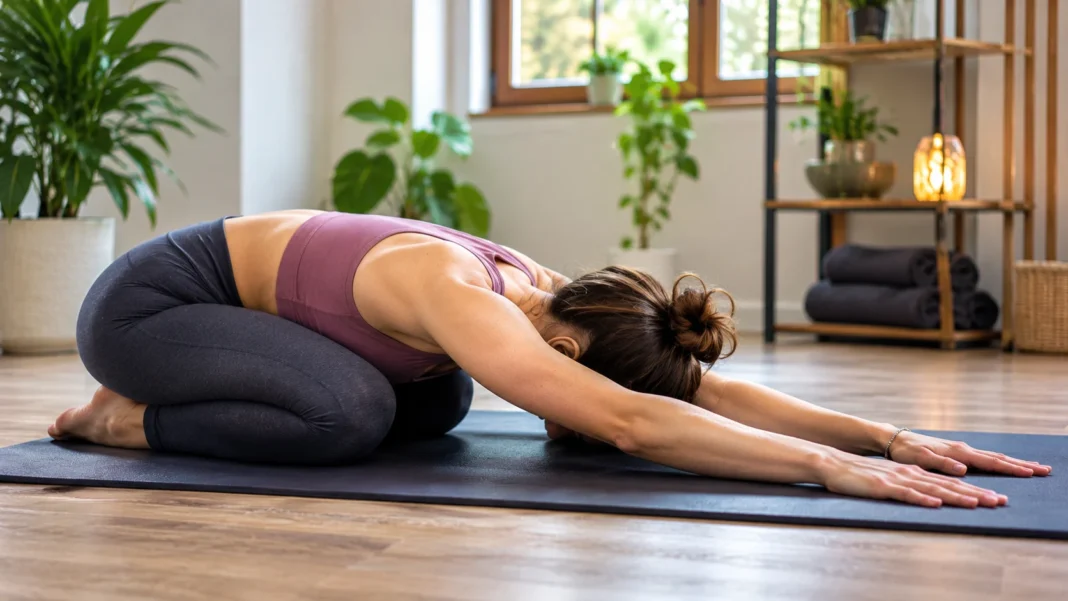
The Child’s Pose stretch is a gentle yoga position that helps improve flexibility, encourage relaxation, and support comfortable movement. It is commonly used during yoga sessions, stretching routines, and recovery activities. The position involves sitting back toward the heels while lowering the upper body toward the floor. This movement can create a mild stretch through the back, hips, and shoulders.
Many people use Child’s Pose to take a comfortable break between exercises or relieve feelings of everyday muscle tightness. Its simple appearance makes it approachable for beginners, although the position may need adjustments for different bodies. Proper alignment and breathing help make the stretch more comfortable and controlled.
Understanding the Child’s Pose stretch can help you practice it safely and effectively. This guide explains its benefits, correct form, common mistakes, useful modifications, and mobility tips. It also covers situations when the stretch may not be appropriate and how to include it in a balanced flexibility routine.
What Is the Child’s Pose Stretch?
Child’s Pose, also called Balasana in yoga, is a resting posture performed from a kneeling position. The hips move backward toward the heels while the torso lowers forward. The arms may extend in front of the body or rest beside the legs. The position creates a gentle stretch through several areas of the body.
The stretch mainly involves the hips, lower back, and surrounding muscles. Depending on arm position, it may also produce mild tension in the shoulders and upper back. Although commonly described as a relaxation posture, Child’s Pose still requires a comfortable range of movement. Not everyone can reach the floor or sit fully back on their heels.
Child’s Pose is frequently included in beginner yoga classes and general mobility routines. It can provide a pause between more demanding movements without requiring special equipment. However, it is not a medical treatment for back pain or other physical conditions. Its usefulness depends on individual comfort, flexibility, and movement tolerance.
Key Benefits of the Child’s Pose Stretch
One potential benefit of Child’s Pose is improved comfort during gentle spinal flexion. The position allows the back to round naturally while the hips move backward. Some people experience a pleasant stretching sensation along the lower back. This may be useful when stiffness is associated with inactivity or prolonged sitting.
Child’s Pose can also support hip and shoulder mobility. Moving the hips toward the heels requires flexion at the hip and knee joints. Extending the arms forward may create a mild stretch along the sides of the torso and shoulders. These effects depend on how the posture is performed and the individual’s available movement range.
Another benefit involves relaxation and body awareness. Holding a comfortable position while breathing slowly may help reduce feelings of tension. It can also provide a calm transition between activities. However, research does not establish that Child’s Pose alone produces specific long-term health benefits or treats underlying medical conditions.
Muscles Worked During Child’s Pose
Child’s Pose primarily stretches tissues around the back, hips, and shoulders rather than strengthening them. The spinal extensor muscles may experience gentle lengthening as the torso rounds forward. Muscles around the hips also move through a flexed position. The amount of stretching varies according to body position and individual mobility.
The latissimus dorsi muscles may experience mild stretching when the arms extend forward. These large muscles connect the upper arms with structures along the back and pelvis. Reaching comfortably through the fingertips can increase the sensation along the sides of the torso. However, forcing the arms farther forward is unnecessary.
The gluteal muscles and other tissues around the hips may also experience some tension. Meanwhile, the knees and ankles remain in bent positions that require adequate joint comfort. These joints are not necessarily receiving a useful muscle stretch. If pressure develops in the knees or ankles, modifications can make the posture more manageable.
How to Do the Child’s Pose Stretch Correctly
Begin on your hands and knees on a comfortable exercise mat. Position your hands beneath your shoulders and your knees approximately hip-width apart. Keep your movements slow and controlled as you prepare to move backward. If kneeling is uncomfortable, consider a supported alternative instead of forcing the position.
Gradually move your hips toward your heels while lowering your torso toward the floor. Extend your arms in front of you with your palms resting comfortably on the mat. Allow your head to lower only as far as feels natural. Your forehead does not need to touch the floor for the stretch to be useful.
Breathe normally and hold the position for approximately 15 to 30 seconds if comfortable. Keep your neck relaxed and avoid pushing your hips forcefully toward your heels. Return to the starting position slowly by moving forward onto your hands and knees. Stop immediately if you notice sharp pain, numbness, or increasing joint discomfort.
Proper Breathing Technique During Child’s Pose
Breathing plays an important role in making Child’s Pose feel comfortable. Begin by taking a slow, natural breath before moving into the position. As you lower your torso, continue breathing without forcing a particular rhythm. A relaxed breathing pattern may help reduce unnecessary muscle tension.
Once settled, allow your abdomen and rib cage to move naturally as you inhale and exhale. You may notice a mild expansion through the back of the torso during inhalation. Avoid holding your breath or trying to produce unusually deep breaths. Comfortable breathing is more important than following a strict pattern.
Some people use Child’s Pose as an opportunity to practice mindful breathing. Paying attention to the rhythm of breathing can encourage relaxation and present-moment awareness. However, the posture should not restrict breathing or create pressure around the chest. Adjust your position if you feel short of breath or uncomfortable.
How Long Should You Hold Child’s Pose?
The appropriate duration depends on comfort, flexibility, and the purpose of the stretch. Beginners may start with approximately 15 to 30 seconds. This provides time to become familiar with the position without maintaining it for too long. Longer holds are not necessary for everyone.
Some yoga routines include Child’s Pose for a minute or longer as a resting position. This may feel comfortable when adequate support is available. However, holding the stretch for an extended period does not automatically produce greater flexibility. Discomfort in the knees, ankles, or back is a reason to adjust or stop.
Rather than focusing on a particular number of seconds, pay attention to your body’s response. Maintain relaxed breathing and avoid forcing the posture. You can repeat a brief hold if it remains comfortable. Gradual consistency is generally preferable to aggressive stretching.
Child’s Pose for Lower Back Flexibility
Child’s Pose places the lower back in a gently rounded position. This movement may feel comfortable for some people experiencing general muscle tightness. It allows the spine and surrounding tissues to move away from an upright position. However, the sensation varies depending on mobility and any underlying back condition.
The stretch may be useful after spending time in one position, particularly when gentle spinal flexion feels relieving. It can encourage movement through the hips and lower back without requiring weights. However, people with certain disc-related conditions or flexion-sensitive back pain may find the position uncomfortable. It is important to respect individual symptoms.
Child’s Pose should not be viewed as a universal solution for lower back pain. Pain can arise from many different causes, including muscle strains, joint problems, and nerve irritation. A stretch that helps one person may aggravate another. Persistent pain or symptoms extending into the legs should be professionally assessed.
Child’s Pose for Hip Mobility
Hip flexion is an important part of the Child’s Pose movement. As the hips travel backward, the thighs move closer to the torso. This position can provide gentle movement through the hip joints. Some people may notice mild stretching around the glutes or outer hips.
People with limited hip flexion may find it difficult to move their hips toward their heels. This does not mean they are performing the exercise incorrectly. Using a cushion or widening the knees slightly may create additional room for the torso. Adjustments should help the position feel comfortable rather than forcing greater movement.
Child’s Pose is only one way to explore hip mobility. Comfortable walking, controlled hip movements, and other suitable exercises can also support joint function. Different activities challenge different movement directions. A balanced mobility routine addresses individual needs rather than relying on a single stretch.
Child’s Pose for Shoulder and Upper Back Mobility
Extending the arms forward during Child’s Pose can create a mild stretch around the shoulders and upper back. The movement involves shoulder flexion as the arms reach away from the torso. Some people also notice tension along the sides of the body. The sensation depends on arm position and shoulder flexibility.
To make the stretch more comfortable, keep your arms relaxed rather than reaching forcefully. Allow your hands to rest naturally on the mat. If the shoulders feel strained, bring the arms closer or position them beside the legs. These modifications can reduce unnecessary tension.
People with shoulder injuries, instability, or limited overhead movement may need additional adjustments. Reaching too far can aggravate sensitive tissues. A supported position or seated alternative may be more suitable. Shoulder mobility should improve through controlled, comfortable movement rather than forceful stretching.
Wide-Knee Child’s Pose Variation
Wide-knee Child’s Pose is a common variation that changes the position of the hips and legs. Begin on your hands and knees before moving your knees slightly farther apart. Keep your toes in a comfortable position and gradually move your hips backward. Lower your torso between your thighs without forcing the movement.
This variation may provide more room for the abdomen and chest. Some people find it easier to breathe or relax in this position. The wider knee placement also changes the angle of hip movement. However, it does not automatically make the stretch safer or more effective for everyone.
Avoid spreading your knees beyond a comfortable range. Excessive width may create discomfort around the hips or inner thighs. Supporting the torso with a pillow can make the position more accessible. Choose a knee position that allows comfortable breathing and stable movement.
Supported Child’s Pose for Beginners
A supported version of Child’s Pose may be helpful when the floor feels too far away. Place a firm pillow or folded blanket beneath your torso before lowering forward. This support can reduce the amount of movement required through the hips and back. It may also make the position easier to maintain briefly.
You can place a folded towel beneath your knees if the floor feels uncomfortable. Additional cushioning may help distribute pressure more evenly. However, people with knee injuries or significant knee pain should not assume that padding makes kneeling appropriate. Alternative positions may be safer.
Support should encourage relaxation without forcing the joints into uncomfortable angles. Adjust the height and placement of cushions until the position feels stable. Your forehead can rest on suitable support if that allows the neck to relax. There is no need to reach the floor to perform a useful modified stretch.
Seated Child’s Pose Alternative
A seated forward-reaching stretch provides an alternative for people who cannot comfortably kneel. Sit on a stable chair with your feet resting flat on the floor. Keep your knees comfortably apart and your hands resting on your thighs. Begin from an upright, relaxed position.
Slowly lean your torso forward within a comfortable range. Allow your hands to slide toward your knees or rest on a stable table in front of you. Keep your movements gentle and avoid forcing your spine to round. Return to sitting upright when you are ready.
This variation is not identical to traditional Child’s Pose because the hips, knees, and shoulders are positioned differently. However, it can provide gentle spinal movement without requiring floor-based kneeling. It may be useful for people with limited mobility. Stop if forward bending produces pain, dizziness, or other unusual symptoms.
Common Mistakes During Child’s Pose
One common mistake is forcing the hips to touch the heels. Body proportions, joint mobility, and muscle flexibility vary between individuals. Some people naturally maintain a gap between their hips and heels. Attempting to eliminate this gap through force may place unnecessary pressure on the knees or ankles.
Another mistake involves stretching the arms too aggressively. Reaching forward with excessive tension can strain the shoulders and upper back. The arms should remain comfortable throughout the position. If reaching creates discomfort, move your hands closer or let them rest beside your body.
Holding the breath or ignoring pain is another concern. A relaxed stretch should not require struggling to maintain the position. Sharp pain, tingling, numbness, or increasing discomfort are signals to stop. Modify the posture or choose a different movement rather than attempting to push through symptoms.
Child’s Pose vs. Cat-Cow Stretch
Child’s Pose and Cat-Cow are both common movements in yoga-based mobility routines. However, they involve different patterns of spinal movement. Child’s Pose is usually held in a relatively stationary position with the hips moving backward. Cat-Cow alternates between spinal rounding and extension while on hands and knees.
Cat-Cow emphasizes controlled movement through different spinal positions. Child’s Pose allows a gentle forward-folded resting posture. Both can contribute to a general mobility routine when comfortable. Neither exercise is automatically better for every person or type of back stiffness.
Choosing between the two depends on individual movement tolerance and goals. Some people prefer dynamic movements, while others find brief supported holds more comfortable. Combining them may provide movement variety without requiring a demanding routine. Avoid either exercise if it aggravates an existing condition.
When Is the Best Time to Do Child’s Pose?
Child’s Pose can be performed at different times of the day depending on comfort and preference. Some people include it in a morning mobility routine to explore gentle movement. Others use it after prolonged sitting or as part of a yoga session. There is no established best time for everyone.
If your body feels particularly stiff, begin with easy movements before lowering into the position. A few comfortable shoulder rolls or gentle walking movements may help you prepare. Avoid forcing a deep stretch immediately after waking or during periods of discomfort. Gradual movement allows you to assess how your body responds.
Child’s Pose may also be used near the end of a general exercise routine as a comfortable transition. However, it is not necessary for recovery after every workout. The most appropriate timing is when the movement feels useful and does not worsen symptoms. Personal comfort should guide the decision.
How Often Should You Practice Child’s Pose?
Child’s Pose may be included in a general stretching routine several days per week. Some people enjoy brief daily practice when the position remains comfortable. However, more frequent stretching is not automatically more effective. The ideal schedule depends on mobility needs, tolerance, and other physical activities.
A short session involving one or two comfortable holds may be sufficient for general movement practice. You can adjust the duration based on how your hips, back, and knees respond. Avoid increasing the frequency simply to achieve a deeper position. The goal is useful movement rather than maximum flexibility.
Consistency can help you become familiar with the posture and recognize changes in comfort. However, stretching should not replace general physical activity or appropriate strengthening exercises. A balanced routine includes different forms of movement. People with ongoing pain or rehabilitation needs should follow individualized advice.
Who Should Avoid or Modify Child’s Pose?
People with significant knee pain, recent knee injuries, or conditions that make deep knee bending uncomfortable may need to avoid traditional Child’s Pose. The position places the knees into substantial flexion. Padding does not always remove stress from sensitive structures. A seated variation may provide a more comfortable alternative.
Those with certain back conditions may also find forward bending uncomfortable. Pain that increases when the spine rounds is a reason to stop. Shoulder injuries can make the extended-arm version unsuitable as well. Professional guidance is recommended when symptoms are persistent or movement restrictions are unclear.
Pregnant individuals may need additional space for the abdomen or a different resting position, depending on their stage of pregnancy and comfort. A wide-knee or supported variation may be suitable for some, but not everyone. Anyone experiencing dizziness, breathing difficulty, or unusual discomfort should leave the position. Medical advice is important when individual health concerns are present.
Mobility Tips to Improve Your Child’s Pose
Focus on making the position comfortable rather than achieving a particular shape. If your hips cannot reach your heels, allow them to remain slightly elevated. Use a cushion beneath your torso when additional support is helpful. Small adjustments can make the stretch more accessible without increasing strain.
Experiment with comfortable arm positions to understand how they affect your shoulders. Reaching forward may produce a mild upper-back stretch, while resting the arms beside the body can encourage a more relaxed position. Neither option is universally superior. Choose the version that allows natural breathing and comfortable joint movement.
Include Child’s Pose alongside other suitable mobility exercises rather than relying on it alone. Gentle hip movements, controlled spinal mobility, and regular walking can support general movement. Gradually explore your comfortable range without forcing progress. If mobility remains significantly restricted or painful, seek professional assessment.
Conclusion
The Child’s Pose stretch is a simple yoga posture that may help maintain comfortable movement through the back, hips, and shoulders. It can also provide an opportunity for relaxation and gentle breathing. Proper positioning and appropriate modifications make the exercise accessible to many people. However, the posture is not suitable for every joint condition or physical limitation.
Learning correct form helps reduce unnecessary strain during the stretch. Keeping movements controlled, using support when needed, and avoiding painful positions are important principles. Different variations can accommodate individual mobility and comfort. Stretching should never require forcing your body into an idealized position.
A consistent mobility routine can include Child’s Pose when it feels comfortable and serves a useful purpose. Combining gentle stretching with regular activity and appropriate strengthening supports overall movement. By listening to your body’s response and adjusting the posture as needed, you can make Child’s Pose a practical part of your flexibility routine.
Frequently Asked Questions
What is the Child’s Pose stretch good for?
Child’s Pose may help improve comfortable movement through the back, hips, and shoulders. It also provides a gentle resting position for some people during yoga or stretching routines. Benefits vary according to individual mobility and comfort.
How long should you hold Child’s Pose?
Beginners can try holding Child’s Pose for approximately 15 to 30 seconds if it feels comfortable. Some people prefer longer supported holds. Stop or modify the position if you experience pain, numbness, or increasing joint pressure.
Does Child’s Pose help with lower back pain?
Child’s Pose may feel relieving for some types of muscle tightness, but it does not treat every cause of lower back pain. Certain conditions can worsen with forward bending. Persistent or severe symptoms require medical assessment.
Can beginners do Child’s Pose every day?
Beginners may practice gentle Child’s Pose daily if the movement remains comfortable and does not aggravate symptoms. Daily practice is not essential, however. Short sessions and appropriate modifications are generally preferable to forceful stretching.
What should you do if Child’s Pose hurts your knees?
Stop the movement if it causes knee pain. A folded blanket may improve comfort for mild pressure, but it cannot address every knee problem. Consider a seated alternative or consult a healthcare professional for persistent symptoms.